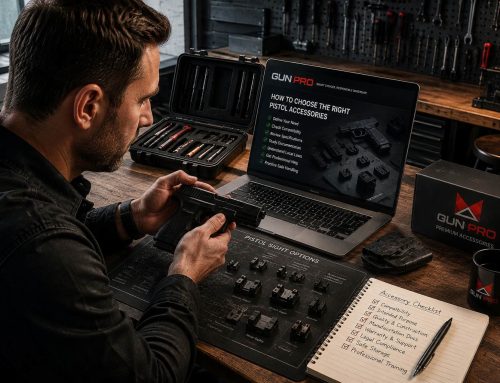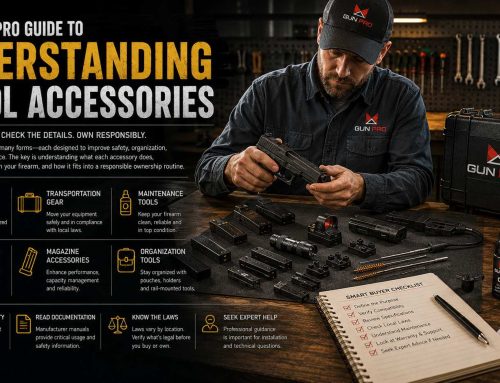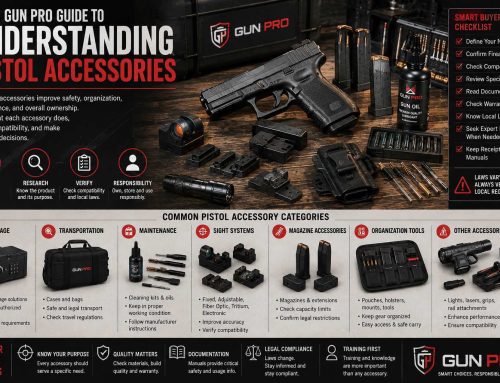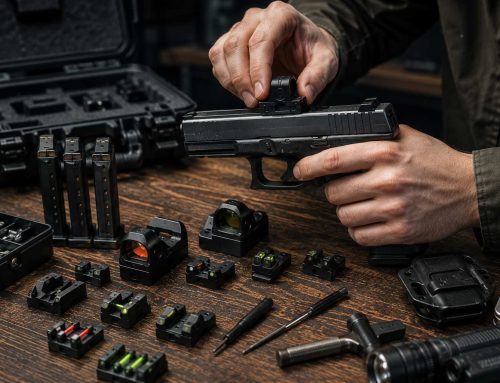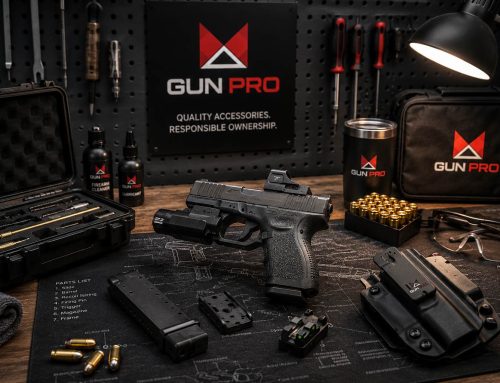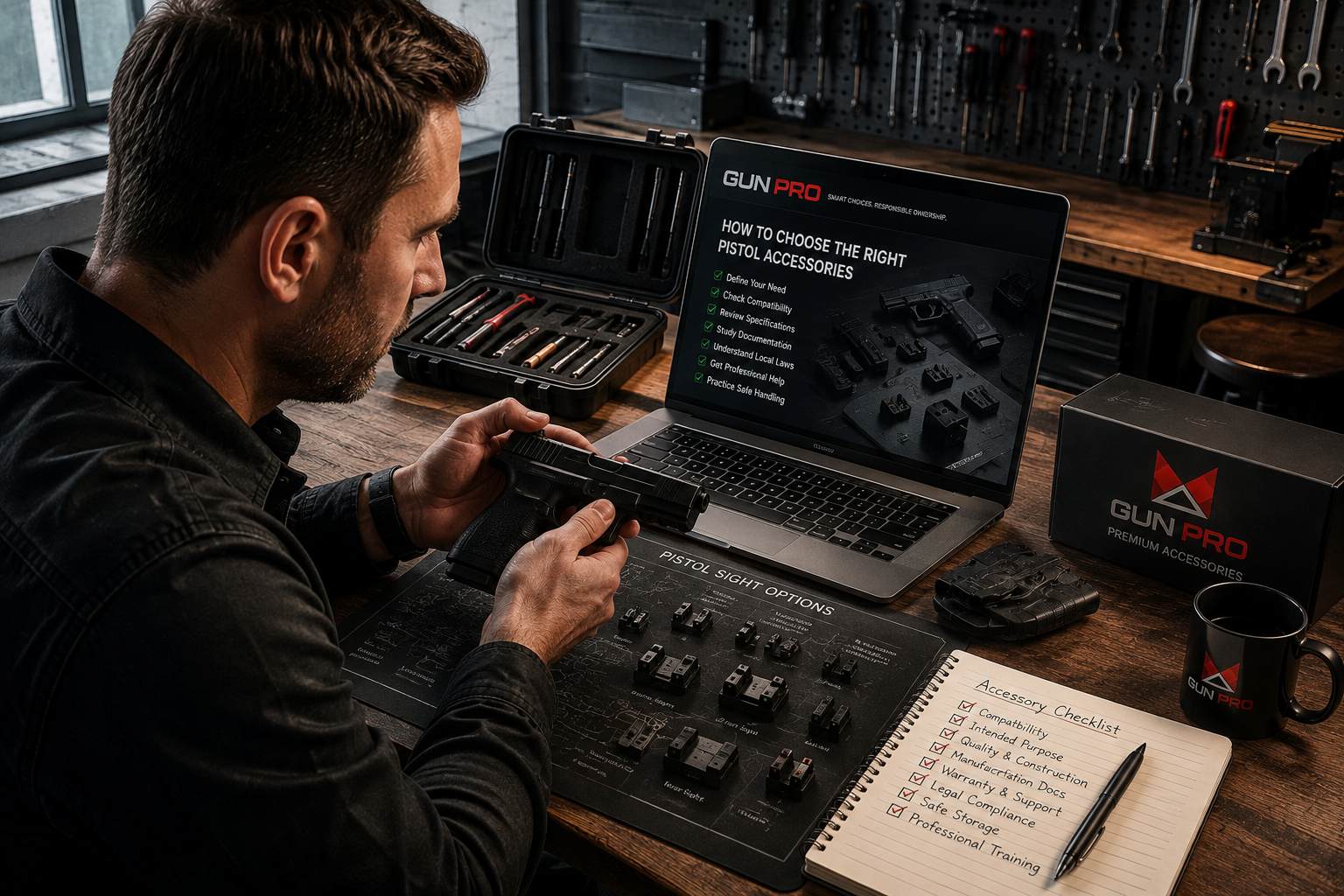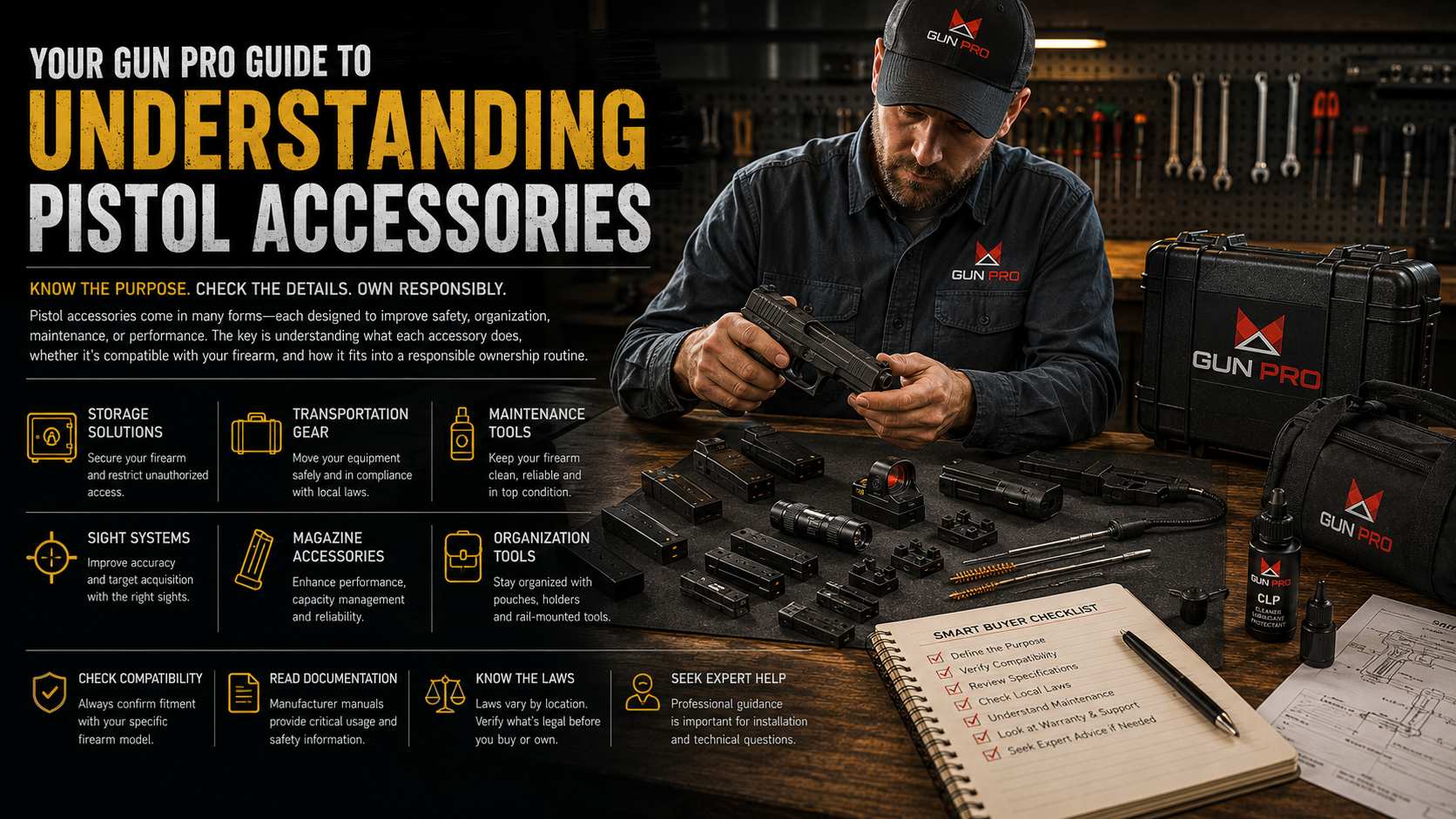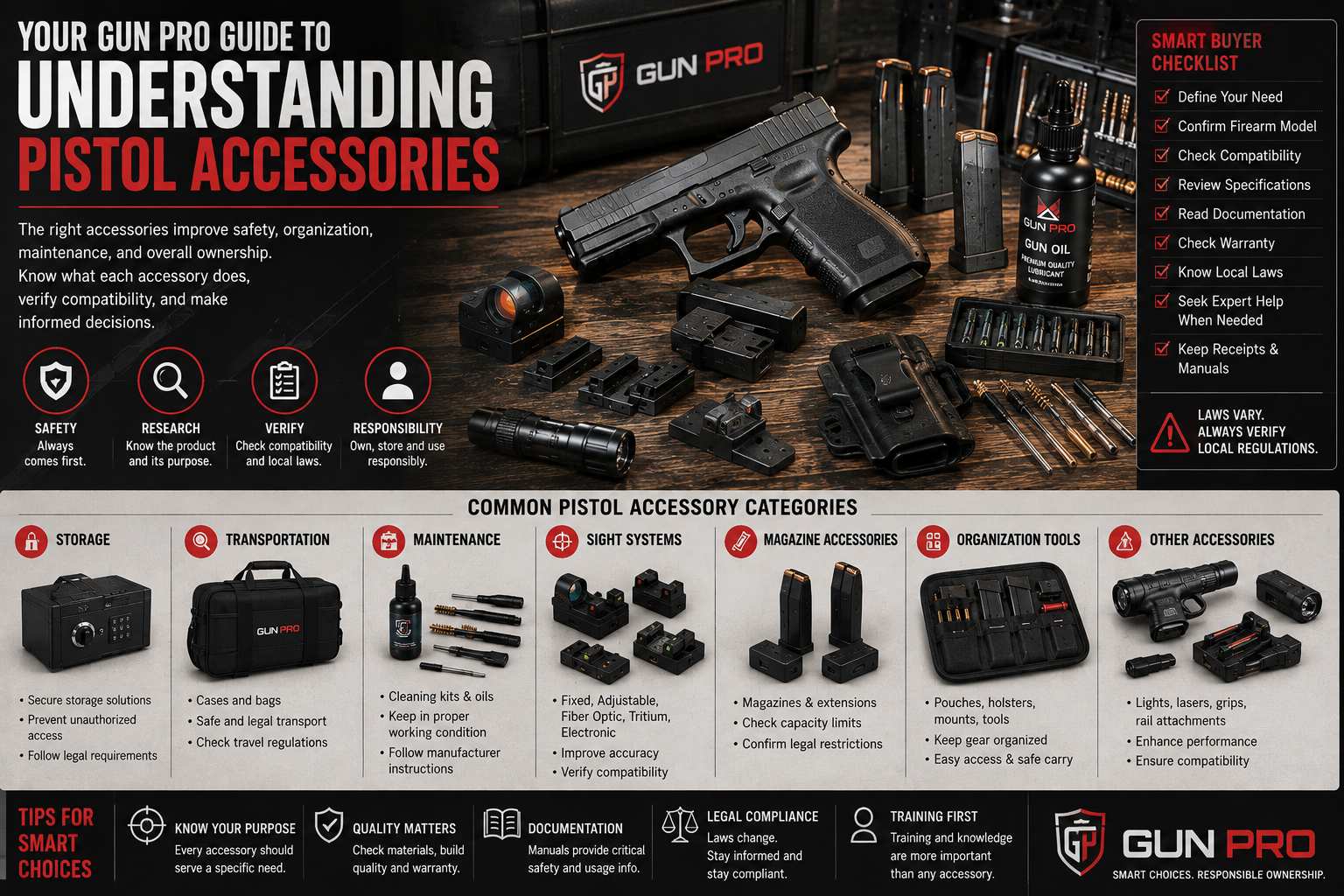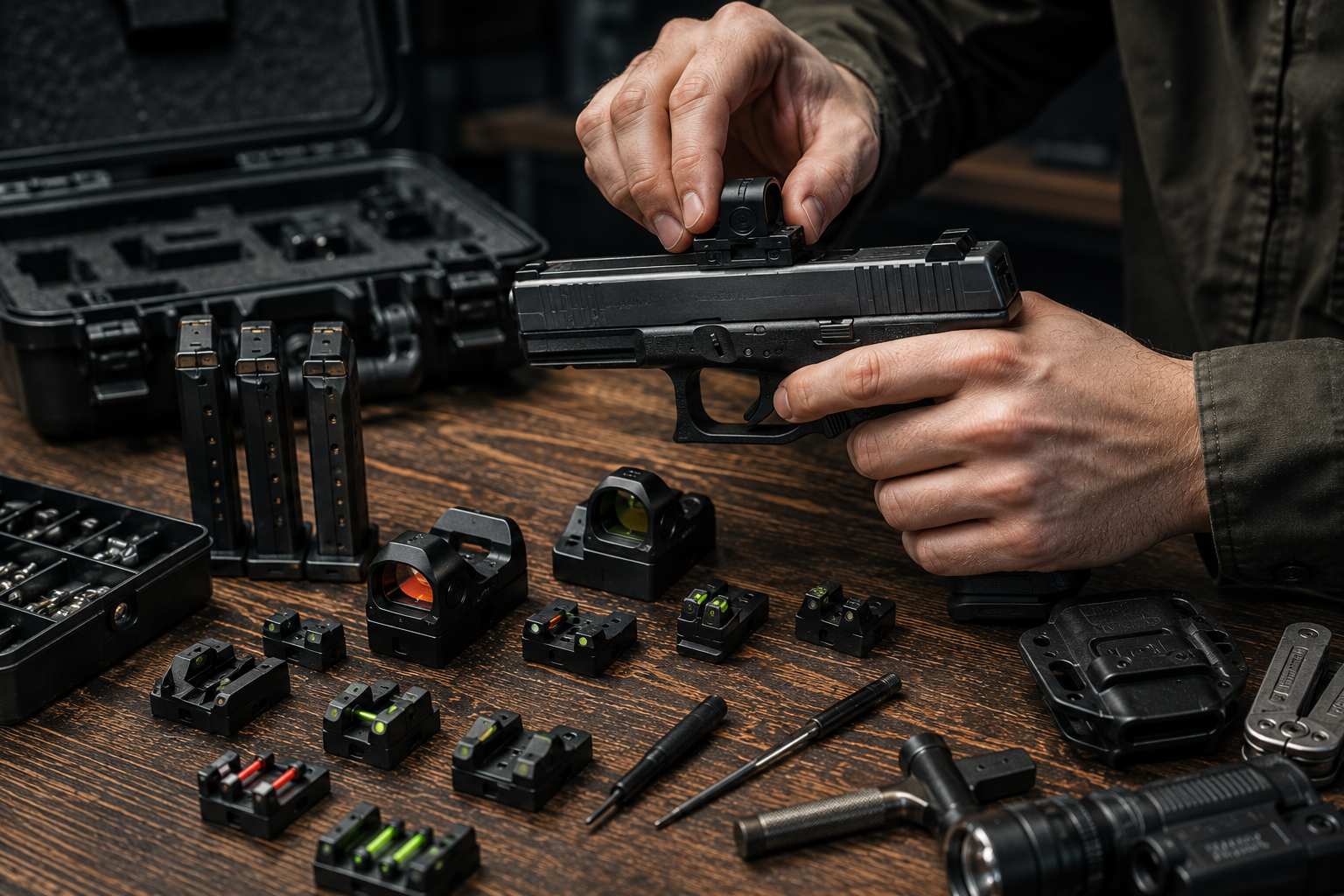
When consumers come across a variety of designs, technologies, materials, profiles, and compatibility requirements, selecting a pistol sight can become challenging. Fixed sights, adjustable sights, fiber-optic components, tritium illumination, electronic systems, low-profile designs, protective construction, and mounting requirements particular to a model may all be mentioned in product listings. Knowing these words is a crucial first step for someone conducting online product research in order to make an informed purchase.
Customers can look up products and accessories linked to firearms online at Gun Pro. But picking an accessory should be more than just looking at pictures or picking the item with the most features. Consumers should be aware of the product’s intended use, confirm compatibility, examine manufacturer documentation, think about maintenance needs, and comprehend local laws.
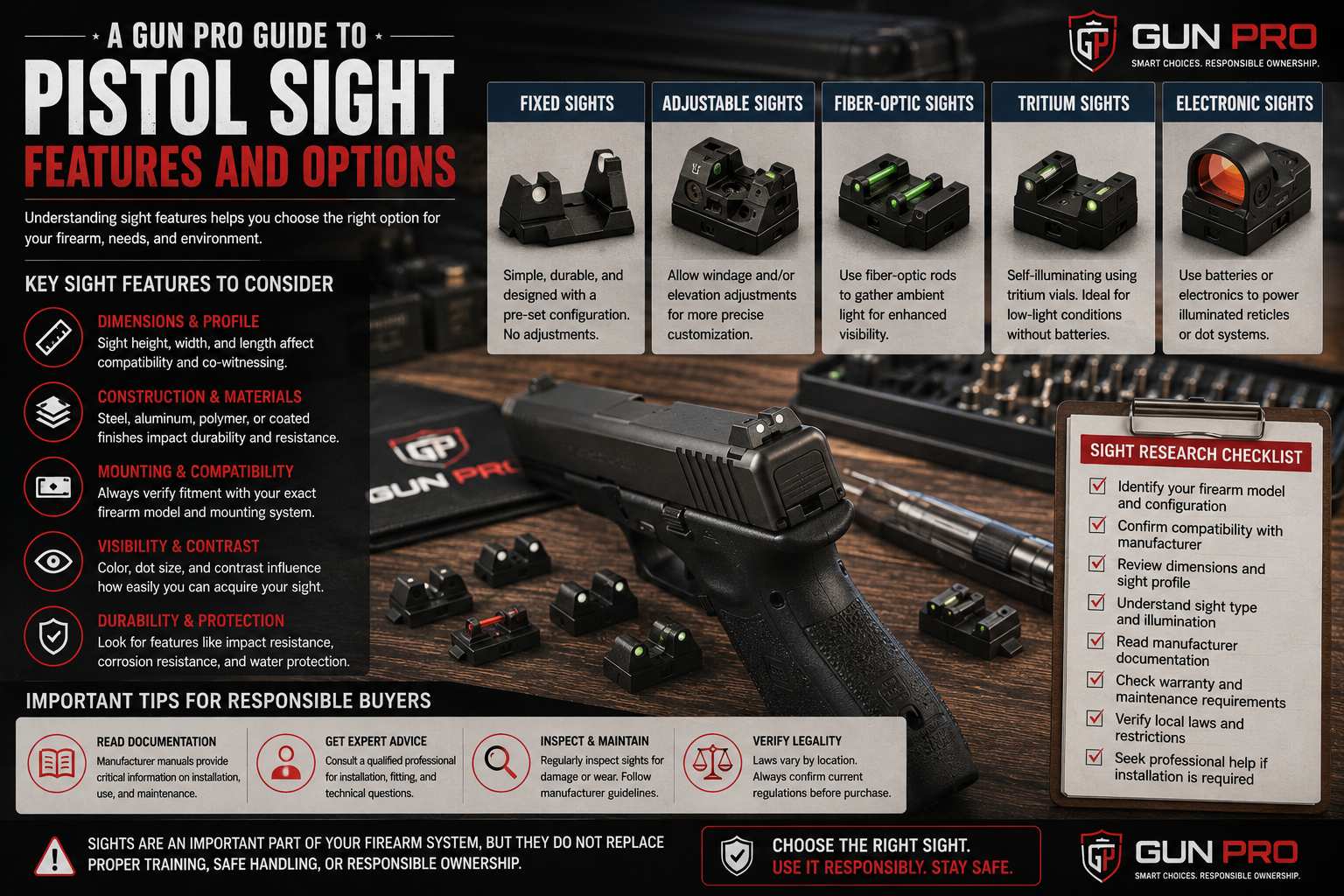
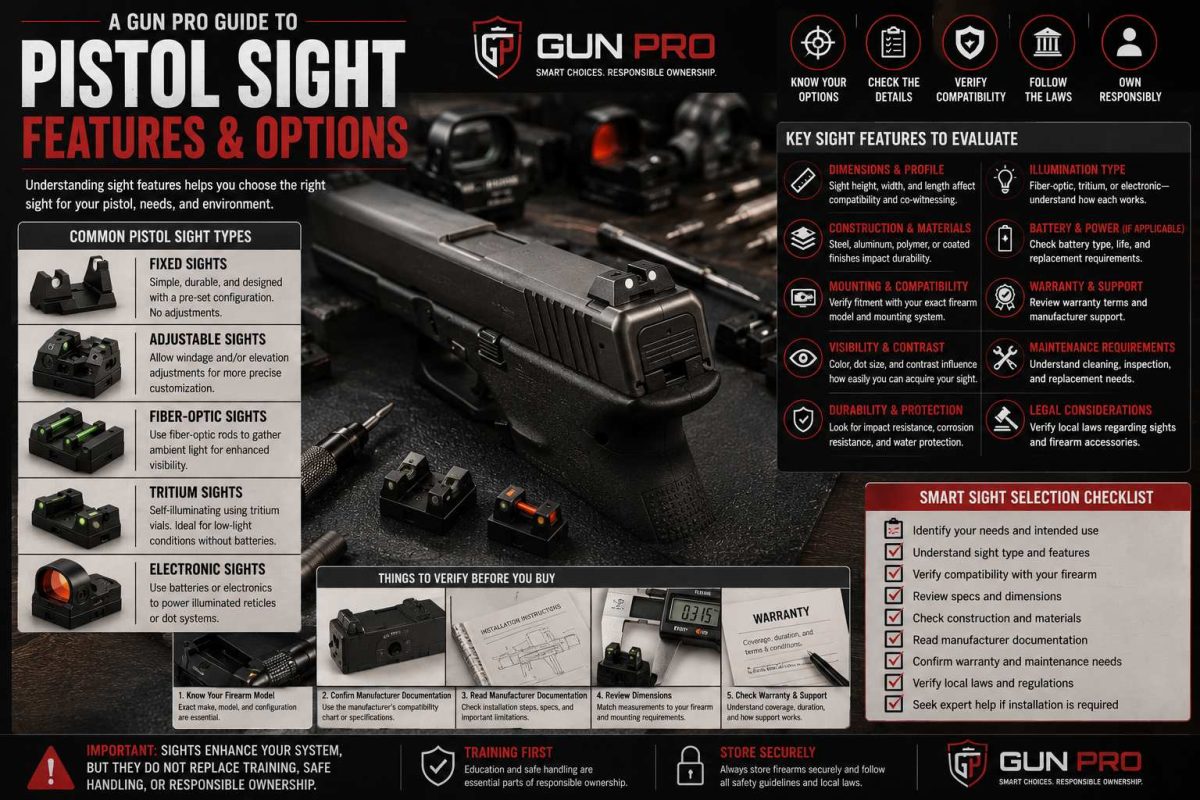
From an instructional and responsible-ownership standpoint, this book examines popular pistol sight characteristics and alternatives. It describes terms that consumers could come across when buying, the significance of specifications, the distinctions between the main sight categories, and useful factors to take into account when assessing products on an online store.
Why Understanding Sight Features Matters
Customers should use caution when choosing a pistol sight because it is a component of a firearm’s sighting system. Even if two products look identical in photos, they may have very different designs and compatibility needs.
Customers can avoid mistaking one category with another by being aware of product features. Additionally, it facilitates the process of determining which requirements apply to a certain firearm.
Selecting the product with the most features shouldn’t be the goal. Customers should instead decide which features are pertinent to their situation and whether the device is backed by trustworthy manufacturer documentation.
Additionally, a well-informed consumer is less likely to base an inappropriate purchase on conjecture.
What Are Pistol Sight Features?
The elements of a pistol sight are what set one sight product apart from another. Construction materials, fixed or adjustable designs, illumination technologies, physical dimensions, mounting configuration, and other features specified by the manufacturer are examples of these.
While some elements are mostly structural, others have to do with product design or visibility.
Customers should study the entire product description and, if needed, refer to the manufacturer’s documentation because various manufacturers may use different language.
A feature that appears appealing in marketing language could have restrictions or particular needs that are only detailed in the technical specifications.
Fixed Sight Designs
Instead of a system meant to enable adjustment, fixed sights are made with a predetermined configuration.
Customers still need to carefully check compatibility even though this can make the core product concept quite simple.
The dimensions, construction, profile, and visibility qualities of fixed sights might differ. A fixed sight made for one type of rifle might not be suitable for another.
Customers should therefore concentrate on the precise model details and manufacturer requirements when thinking about a fixed sight rather than presuming that similar-looking products are interchangeable.
Adjustable Sight Designs
Mechanisms that enable specific configuration changes are incorporated into adjustable sights.
Compared to fixed designs, adjustable designs could have more components from the standpoint of product research. Therefore, manufacturing instructions, building details, and compatibility criteria should be taken into consideration by customers.
A sight is not always a superior option just because it has an adjustable mechanism. The particular firearm and the owner’s justifiable needs determine which product is best.
Fiber-Optic Features
Optical materials intended to gather ambient light are used in fiber-optic sight systems.
A fiber-optic element’s visibility can change based on the lighting in the area. Customers should be aware of this feature because product descriptions might not adequately convey how environmental factors can impact an optical element’s appearance.
The manufacturer’s specs, construction details, measurements, and compatibility information should be reviewed by customers looking at fiber-optic choices.
As with any sight product, the objective should be to comprehend the use of the feature rather than presuming that a specific technology is suited for all situations.
Tritium Illumination
Instead of using traditional batteries, tritium-based sights use a radioactive isotope to generate illumination.
The features of this technology set it apart from both electronic illumination systems and conventional sights. Since tritium naturally decays over time, the material’s lighting properties may alter as it matures.
Customers should carefully check manufacturer documentation and relevant legislation because tritium is a regulated radioactive substance.
Information on projected service life, warranty coverage, handling, and other pertinent factors may be found in product paperwork.
Instead of assuming anything about the technology, customers should rely on information provided by the manufacturer.
Electronic Sight Options
Electronic illumination or other electronic components are incorporated into several pistol sight products.
Additional factors, including battery needs, power management, environmental constraints, and maintenance, may be introduced by these systems.
Consumers who are thinking about purchasing an electronic device should check the manufacturer’s paperwork for details on battery type, suggested replacements, storage, working conditions, and warranty coverage.
Documentation is particularly crucial because electronic goods may have more components than traditional designs.
Sight Profile and Dimensions
One of the most crucial details to verify when buying a sight is its physical dimensions.
Sight height, breadth, length, profile, and other dimensions may be described in product listings.
Compatibility with a particular firearm configuration may be impacted by these dimensions. Even though a sight looks similar to another product, its proportions may differ, rendering it inappropriate for a given use.
Therefore, instead of assuming dimensions from product photos, customers should utilise manufacturer specs.
Before making a purchase, expert clarification should be sought if the necessary measurements are uncertain.
Construction Materials
Different materials are used by manufacturers to make pistol sights.
Metals, polymers, optical materials, protective coatings, or electrical components may be used in construction, depending on the product.
Instead of thinking that a certain material inevitably denotes greater quality, customers should check the manufacturer’s claimed structure.
Customers can compare similar items more impartially and comprehend the intended features of the product with the aid of construction information.
When assessing the quality of a product, warranty details and manufacturer assistance can also offer helpful context.
Compatibility Is a Critical Feature
Compatibility is more than just another requirement. It is among the most crucial factors to take into account when buying a pistol sight.
Different mounting configurations, dimensions, and manufacturer-specific requirements may apply to different firearm types.
Before making a purchase, customers should determine the precise model of firearm and confirm compatibility using trustworthy manufacturer information.
To determine compatibility, a product title is insufficient.
Before placing a purchase, consumers should get in touch with the manufacturer, retailer, or a competent expert if a product listing is ambiguous.
Because photos can make things seem more interchangeable than they actually are, this is especially crucial when shopping online.
Mounting and Configuration Information
Some mounting configurations or manufacturer-specific arrangements are the basis for the design of some sight items.
Determining these elements just from photos might be challenging.
Therefore, where accessible, customers should review compatibility charts and technical requirements.
Customers who are not familiar with the process should think about hiring a professional if the product needs to be fitted or technically installed.
Avoid making haphazard changes, especially if the manufacturer does not support them.
Visibility Characteristics
The visual attributes of sight items, including as colour, contrast, illumination, and physical design, might vary.
Environmental factors and personal vision can also affect visibility.
Customers should therefore be wary of generalisations that imply one sight is generally easier to see.
Instead, consumers should read the manufacturer’s description and decide if the listed features apply to their situation.
Instead of using an item as a stand-in for vision care, customers with vision issues might choose to consult a qualified specialist.
Product Durability and Protection
Certain visual items may be described by manufacturers as being made to endure specific environmental conditions.
Consumers should carefully review these claims and, if available, seek out supporting details.
Depending on the manufacturer, terms like “water resistance,” “impact resistance,” “corrosion resistance,” or “environmental protection” can have different meanings.
Just because a thing is advertised as durable does not mean that it is unbreakable.
Regardless of how the product is made, it is still crucial to follow the manufacturer’s care instructions.
Quality Should Be Evaluated Holistically
A quality sight should not be judged solely by its price, appearance, or number of features.
Customers should consider:
- Materials and construction
- Precise measurements and compatibility
- Documentation from the manufacturer
- The intended use
- Coverage under warranty
- Requirements for maintenance
- Customer service
- Relevant legal requirements
This more comprehensive strategy assists consumers in comparing goods based on relevant data rather than advertising claims.
A more expensive product isn’t always superior, and a less expensive product isn’t always inappropriate.
The customer’s legitimate needs and the product’s recorded features determine the optimal option.
Manufacturer Documentation Is Essential
Information that isn’t always present in an online product listing can be found in manufacturer documentation.
Installation specifications, compatibility data, measurements, maintenance guidelines, warranty information, product restrictions, and other technical details are examples of this.
Before making a purchase, customers should review this information and save it afterward.
Before moving forward, clarification should be sought if information from a manufacturer and store seems contradictory.
Product-specific documentation should be prioritised over general recommendations when it comes to accessories linked to firearms.
Professional Assistance for Technical Questions
Technical installation or fitting may be required for certain handgun sight products.
Consumers should think about speaking with a trained expert if they are inexperienced with firearm-related tasks.
Questions concerning whether a product is appropriate for a specific firearm configuration and whether a special fitting is needed can be answered with expert assistance.
Consumers shouldn’t try new changes based only on generic online information.
Responsible ownership includes understanding the boundaries of one’s own technical expertise and adhering to manufacturer directions.
Maintenance and Inspection
Observing the state of accessories is part of responsible equipment management.
When it comes to inspection, cleaning, maintenance, and replacement, customers should adhere to the manufacturer’s recommendations.
A professional inspection can be necessary if a sight looks damaged, loose, fractured, rusted, or otherwise dubious.
Unsupported repairs and alterations should be avoided by owners.
Organising product manuals, warranty details, receipts, and other paperwork helps facilitate upkeep and support in the future.
Choosing Features Based on Genuine Needs
Products with a lot of features may be tempting, but extra features aren’t always required.
Consumers should first determine the precise demand they are attempting to fulfil.
There could not be much justification for giving a feature top priority if it doesn’t serve a significant purpose for the customer’s situation.
This strategy can lower equipment complexity and assist avoid wasteful spending.
Rather than aiming for the biggest collection of accessories, the objective should be a reasonable and useful configuration.
Shopping for Sight Options at Gun Pro
Customers looking to investigate pistol sight items and related accessories might find Gun Pro to be a handy internet resource.
Instead of depending just on product photos, consumers should thoroughly read product descriptions and compare features.
While manufacturer paperwork can offer more technical insights, the retailer’s product information can aid customers in understanding their options.
Customers should speak with the relevant manufacturer, certified professional, or official authority if they have any queries about compatibility, installation, legal constraints, or specialised firearm work.
Responsible E-Commerce Research
Online purchasing facilitates product comparison, but it also increases the risk of miscommunication.
Before placing an order, customers should check the product specs and refrain from thinking a product would fit just because it looks like an existing component.
Important details regarding warranty coverage, intended use, and limits can also be found by reading the entire product description.
It is better to contact customer service before placing an order if crucial information is lacking rather than speculating.
This strategy can increase the efficiency of the shopping process and decrease inappropriate purchases.
Storage and Responsible Ownership
Selecting a sight does not take the place of basic weapon safety obligations.
Safe storage is still crucial, especially in homes where children, guests, or other unauthorised people can be present.
Owners should adhere to manufacturer guidelines for storage equipment as well as any applicable storage laws.
Appropriate education, safe handling techniques, maintenance awareness, and legal compliance are all components of responsible ownership.
Instead of taking attention away from these duties, accessories should help them.
Transportation Considerations
The standards for transportation might differ significantly between countries.
Customers should confirm the current regulations that apply to their region, destination, and circumstances before transporting firearms or related equipment.
Although transportation equipment can help with security and organization, it does not prove legal compliance on its own.
Before travelling, consumers should learn about the relevant regulations, particularly when crossing borders.
Official sources or knowledgeable legal experts should be sought when regulations are unclear.
Legal Requirements
States, provinces, municipal governments, and nations can all have different gun regulations.
Ownership, purchasing, storage, transportation, accessories, and other activities involving firearms may be subject to requirements.
Over time, regulations may also alter.
Before acquiring or owning firearm-related products, consumers should confirm current regulations with the relevant official sources.
The availability of a product through an online merchant does not ensure that every consumer is legally allowed to buy or own a specific item.
A Practical Pistol Sight Research Checklist
Customers researching pistol sight features can use the following checklist before making a purchase:
- Determine the precise model and configuration of the firearm.
- Identify the sight category and its intended use.
- Examine the compatibility information provided by the manufacturer.
- Examine building specifications and dimensions.
- Find out if the product uses electronic, fiber-optic, tritium, or conventional lighting.
- Examine the manufacturer’s guidelines, restrictions, warranty conditions, and upkeep details.
- Before making a purchase, confirm any applicable legal requirements.
- When technical fitting or installation is necessary, seek for experienced professional assistance.
This checklist is designed to support informed product research and does not replace professional or legal advice.
Final Thoughts
Online buying can be made much easier by being aware of the features and alternatives available for pistol sight. Each design—fixed, adjustable, fiber-optic, tritium, and electronic—has unique qualities, and the best option is determined by the firearm, recorded specifications, specific situation, and relevant regulations.
Compatibility and purpose should be the first steps in responsible product research for Gun Pro consumers. Customers can have a better understanding of what they are considering by consulting manufacturer paperwork, dimensions, construction details, warranty information, and maintenance needs.
Additionally, consumers should keep in mind that responsible ownership encompasses more than just firearm accessories. Legal compliance, safe transit, professional education, safe handling procedures, maintenance knowledge, and secure storage are still crucial.
The product with the most features isn’t always the best choice. It is the product that can be integrated into a responsible ownership process, has a clearly defined purpose, is properly documented, and satisfies the necessary standards.
Customers of Gun Pro can approach online buying with more understanding and make selections based on trustworthy information rather than conjecture or marketing promises by taking the time to learn about sight features before making a purchase.
Frequently Asked Questions
Which are the primary alternatives for pistol sight?
Fixed sights, adjustable sights, fiber-optic sights, tritium-based sights, and electronic or battery-powered designs are common classifications. Products may incorporate features from several different categories.
What distinguishes adjustable sights from fixed sights?
While adjustable sights contain mechanisms that enable specific features of their setup to be altered, fixed sights have a predetermined configuration. It is usually advisable to verify compatibility and product specs.
Fiber-optic sights: what are they?
Optical materials intended to gather ambient light are used in fiber-optic sights. The lighting in the area can affect how they look.
Tritium sights: what are they?
Tritium sights give illumination without the need for traditional batteries by using a radioactive isotope. Customers should check manufacturer information about handling and service life because tritium naturally deteriorates over time.
Are batteries needed for electronic sights?
Batteries or other power sources are used in certain electronic sight goods. For information on battery needs, upkeep, and storage, customers should consult the manufacturer’s specifications.
How significant are the proportions of the sight?
For compatibility, dimensions can be crucial. Instead of estimating from photos, customers should compare the manufacturer’s measurements with the firearm’s precise specs.
Do I need to install a sight myself?
It is wise to consult a certified professional if installation or fitting calls for technical handgun knowledge. You should always adhere to the manufacturer’s directions.
How can I find out if a sight is compatible?
Verify the precise model of the firearm and contrast it with the compatibility data provided by the sight manufacturer. Before making a purchase, get clarification if the information is confusing.
Is superior quality guaranteed by a more expensive sight?
No, construction, documentation, compatibility, warranty support, intended use, and other pertinent factors should be considered when evaluating quality instead of just price.
Are pistol sights permitted everywhere?
Laws might alter throughout time and differ depending on the jurisdiction. Before buying, possessing, transporting, or utilising accessories related to firearms, customers should confirm the most recent local regulations.