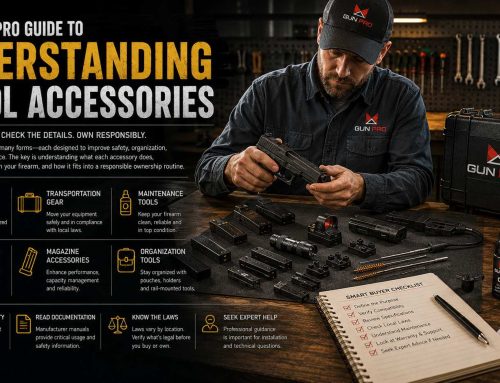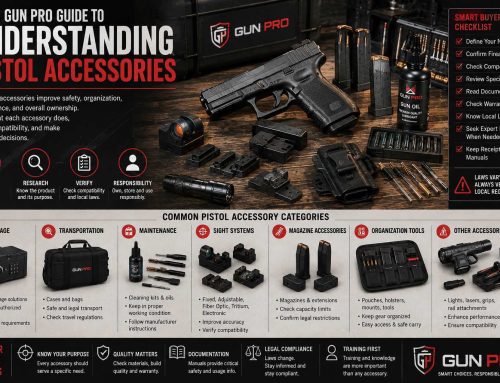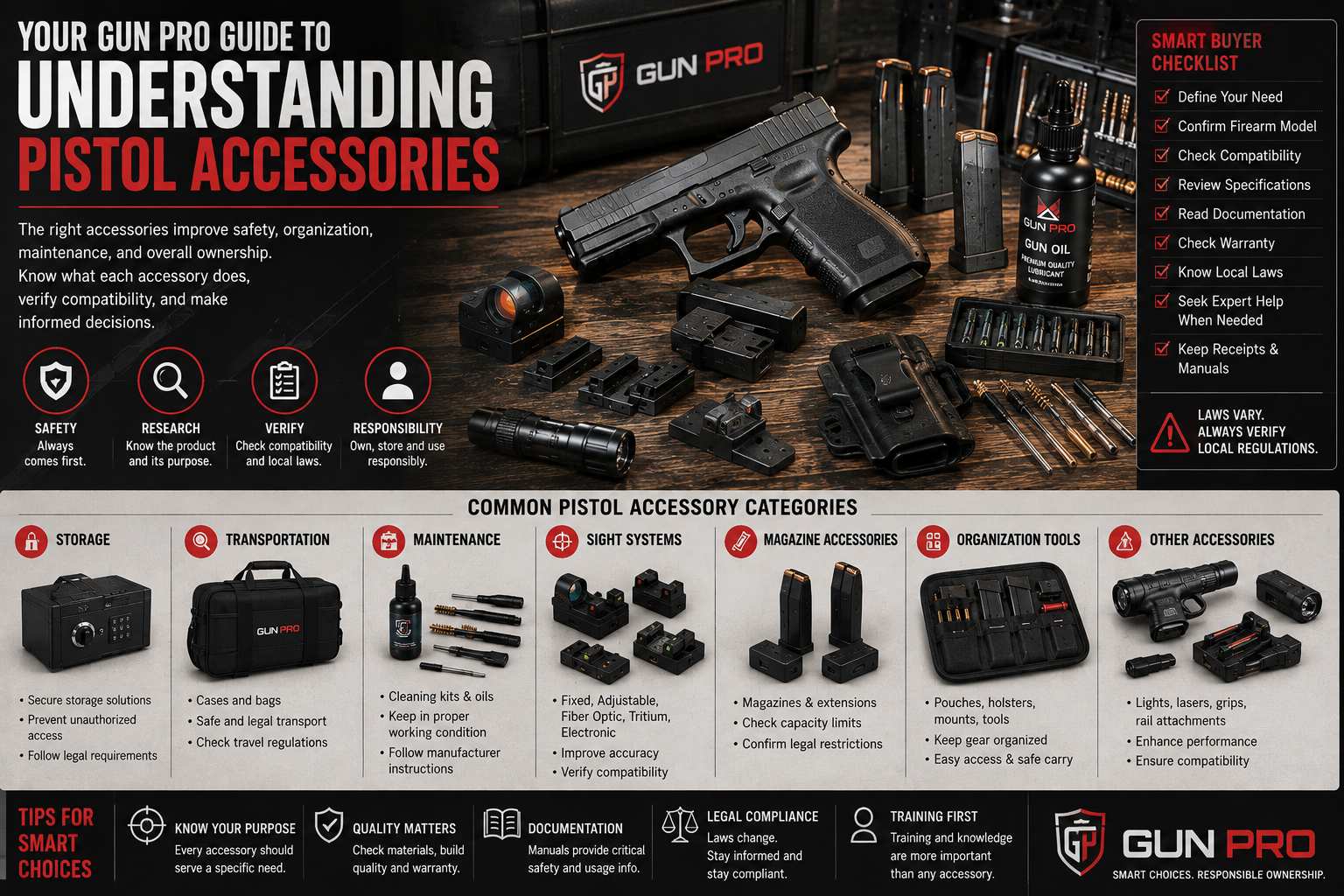
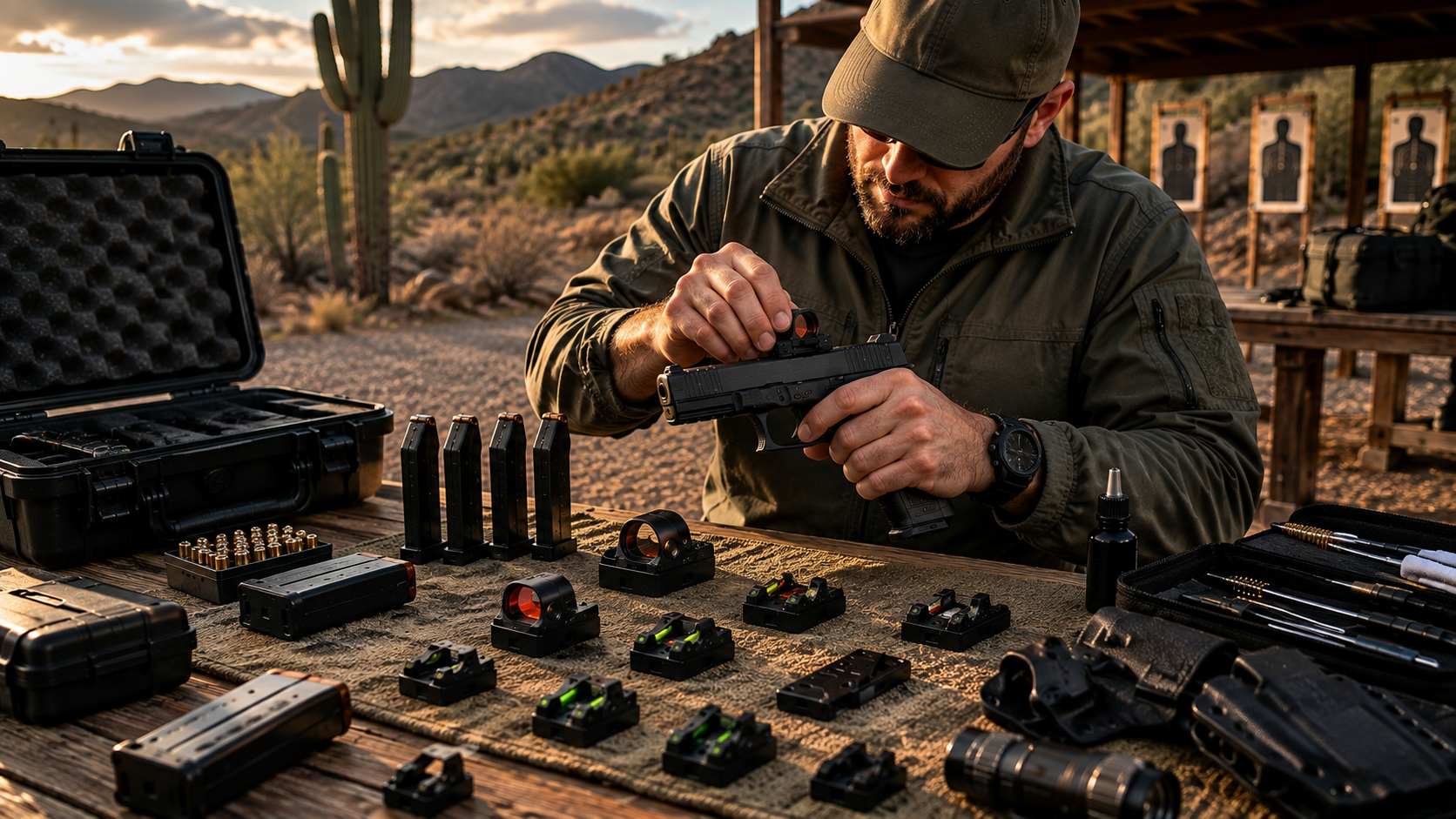
Pistol accessories encompass a wide variety of goods, and knowing what each category is intended to do can greatly simplify online buying. Products pertaining to storage, transportation, maintenance, organization, sights, magazines, and other equipment may be found by consumers looking into handgun accessories. Responsible consumers should take the time to learn the specifics before making a purchase because these products may have various uses and compatibility requirements.
Customers looking for pistol accessories and associated firearm supplies can visit Gun Pro’s website. But making a wise purchase should require more than just looking at product photos or picking something just because it seems popular. Whether an accessory is appropriate might depend on a number of factors, including product purpose, manufacturer standards, compatibility, construction, warranty information, maintenance requirements, and applicable legislation.
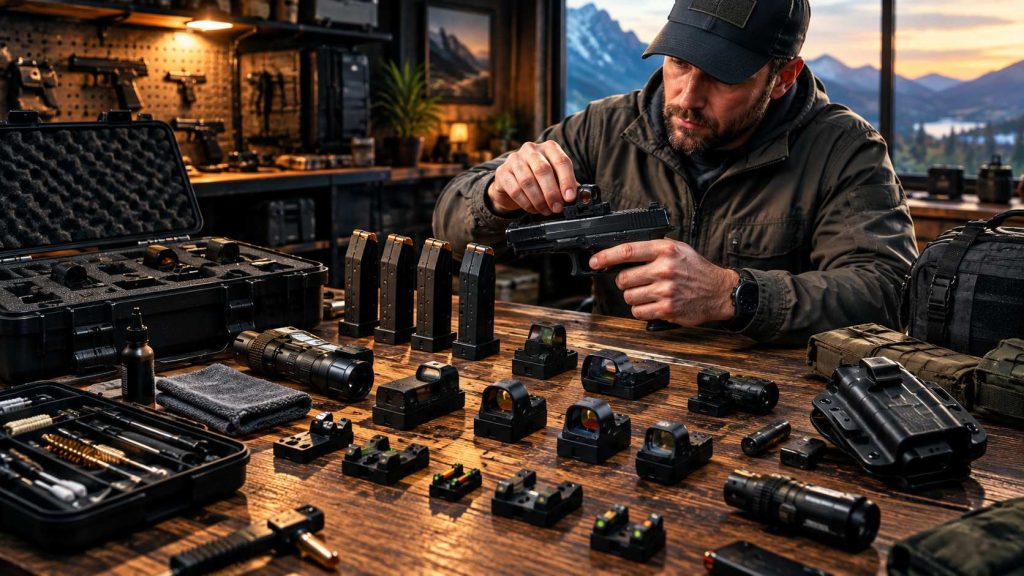
This post offers helpful advice on what buyers should know before making a handgun accessory purchase. The emphasis is on responsible firearm ownership and intelligent online buying, assisting readers in understanding product categories without supposing that every accessory is required for every owner.
Why Understanding Pistol Accessories Matters
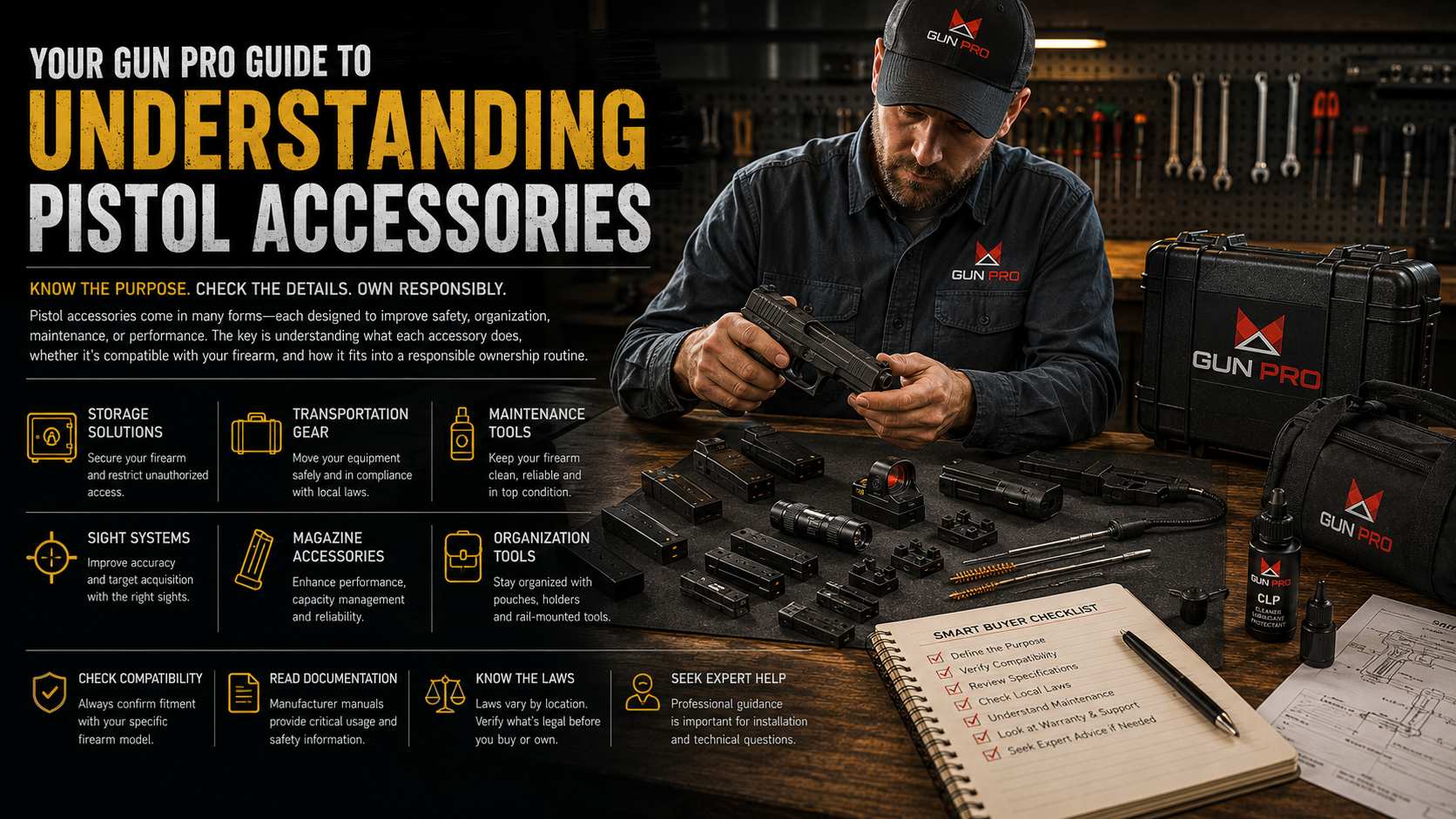
The phrase “pistol accessories” refers to a wide range of goods. While some are related to transportation, organization, maintenance, or firearm components, others are meant to facilitate safe storage.
Customers should refrain from perceiving accessories as interchangeable due to the category’s breadth. Each product has a distinct function and set of requirements.
Knowing an accessory before you buy it might help you avoid overspending and lessen the chance that you’ll order the wrong item. When technical queries come up, it also facilitates communication with manufacturers and dealers.
Asking whether an accessory is popular is not the most helpful question. Rather, consumers should enquire as to whether it fulfils a legitimate requirement, whether it works with the appropriate firearm, and whether trustworthy paperwork backs up its stated use.
Start With the Purpose
Determining the purpose of an accessory is the first step in a prudent shopping procedure.
If secure storage is the goal, the consumer should concentrate on products made for that purpose and assess them in accordance with relevant regulations. The consumer should take into account both the planned use of the product and any applicable transportation regulations if the purpose entails transportation.
While components associated to firearms may need thorough compatibility research, maintenance products should be assessed in accordance with manufacturer directions.
Product selection may be more effective with this purpose-first strategy. Customers can concentrate on the sections that truly meet their needs rather than aimlessly perusing the entire catalogue.
Additionally, it lessens the likelihood of buying goods just because they seem appealing or are highly advertised.
Understanding Accessory Categories
In general, pistol accessories fall into a number of major categories.
Organization and safe access are the main goals of storage products. The purpose of transportation equipment is to facilitate equipment management while travelling. When used in accordance with the proper recommendations, maintenance-related goods enhance care.
Additionally, sight-related products, magazine-related products, organisational tools, and other accessories may be encountered by customers.
There are various factors to take into account for each category.
For instance, compatibility may be particularly crucial for parts made specifically for firearms, and regulatory restrictions may be especially pertinent to some products connected to magazines. Access-control issues may arise with storage products.
Comprehending the category prior to evaluating specific products strengthens the basis for conscientious purchasing.
Storage Should Remain a Priority
One of the most crucial elements of proper gun ownership is safe storage.
It is important to store firearms in a way that helps prevent unwanted access. This is particularly crucial in houses where there can be kids, guests, or other people.
Clients should take into account their unique situation and comprehend the storage regulations that apply to their jurisdiction.
Additionally, storage goods should be utilised regularly. Buying a storage accessory won’t address the root cause if you don’t develop good storage practices.
Therefore, before concentrating on optional equipment, Gun Pro buyers investigating accessories should take storage demands into account.
Transportation and Organization
Because laws differ between jurisdictions, transportation may include additional obligations.
Owners should confirm the current regulations that apply to their area, destination, and circumstances before shipping a firearm or related equipment.
Although having a case or container does not guarantee legal compliance, transportation accessories may help with security and organization.
Additionally, because regulations may vary across state, provincial, or national borders, customers should exercise extra caution while travelling between jurisdictions.
Official sources or knowledgeable legal experts are preferable than presumptions or out-of-date internet information when in question.
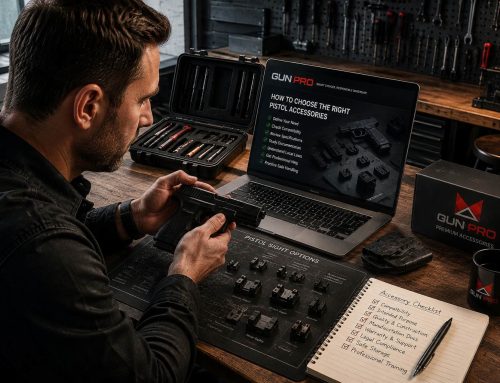
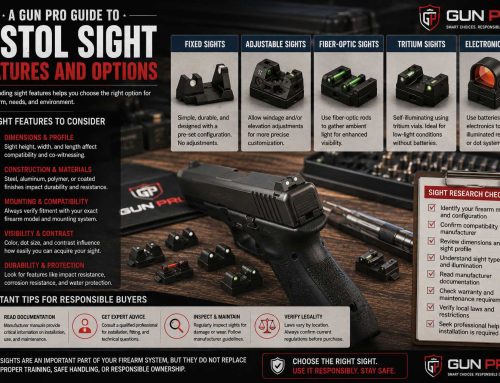
Understanding Pistol Sight Accessories
Sight-related products are a common category within pistol accessories.
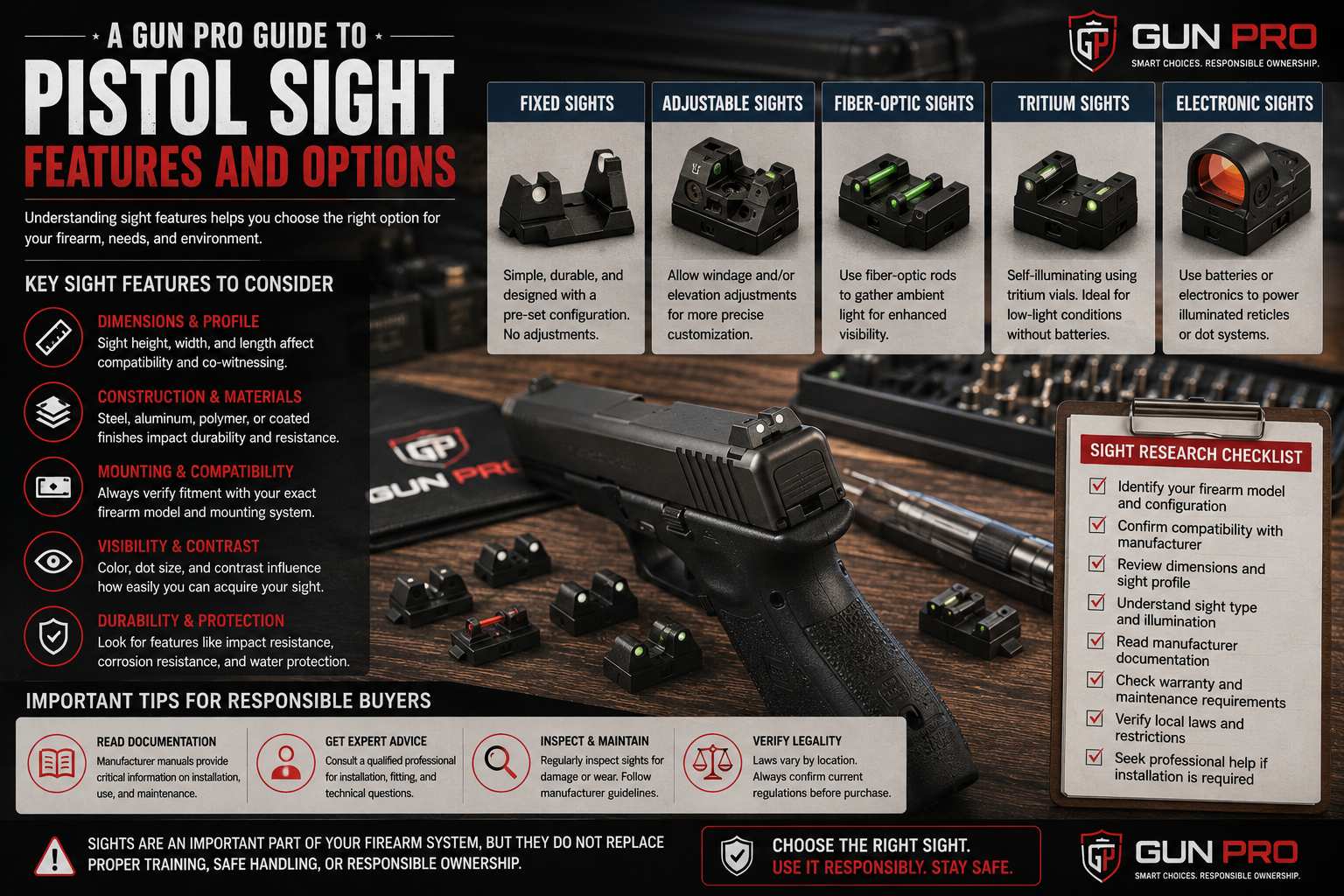
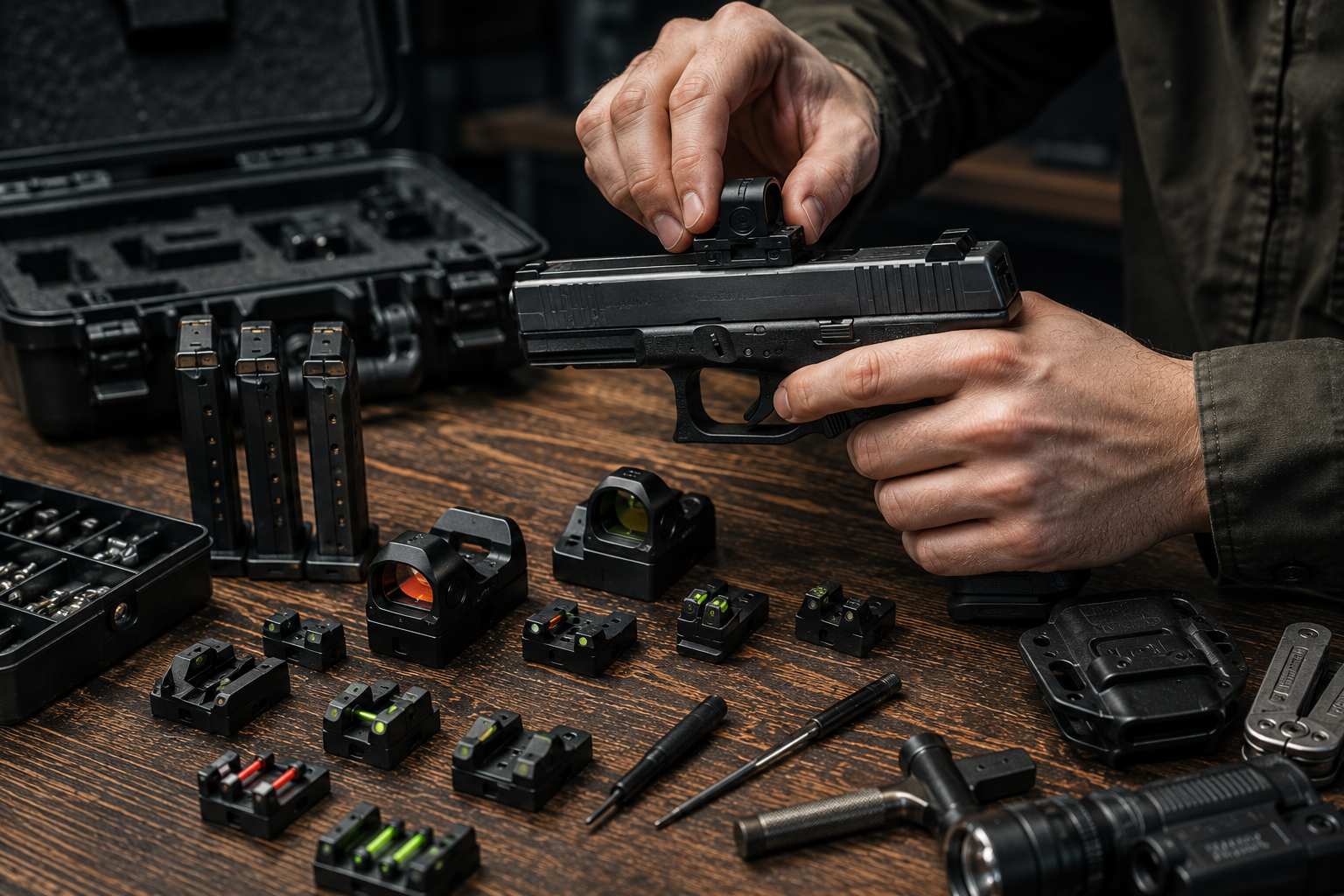
Customers may encounter fixed, adjustable, fiber-optic, tritium-based, and electronic sight designs. These products can differ in construction, dimensions, illumination technology, and compatibility.
Compatibility should always be verified before purchasing.
Customers should identify the exact firearm model and compare it with the manufacturer’s specifications. Product photographs should not be treated as confirmation that a sight will fit.
If installation or fitting requires technical firearm knowledge, professional assistance may be appropriate.
Magazine-Related Products
Magazine-related products may also appear in firearm accessory catalogs.
Customers should pay close attention to product specifications, compatibility information, construction, and applicable laws.
Capacity restrictions and other requirements can vary significantly by jurisdiction. Regulations may also change over time.
For this reason, customers should verify current local requirements before purchasing or possessing magazine-related products.
Retail availability should never be treated as a guarantee that a product is lawful for every customer or location.
Maintenance-Related Accessories
Responsible firearm ownership includes awareness of equipment condition and maintenance.
Maintenance-related accessories should be used according to manufacturer instructions. Different products may have different care requirements, and generic advice should not replace product-specific documentation.
Owners should pay attention to signs of damage, excessive wear, corrosion, cracks, or other abnormalities.
If an accessory appears damaged or defective, professional inspection may be appropriate.
Customers should avoid unsupported repairs or modifications, particularly when unfamiliar firearm components are involved.
Compatibility Is Essential
One of the most important considerations when purchasing pistol accessories is compatibility.
Firearms can differ in dimensions, configurations, mounting arrangements, and manufacturer specifications. Products that look similar may not be interchangeable.
Customers should verify compatibility using manufacturer documentation before ordering.
A product title or photograph is not enough to establish compatibility.
When important specifications are unclear, contacting the retailer, manufacturer, or qualified professional can help prevent an unsuitable purchase.
This is especially important for online shopping because customers cannot physically inspect products before placing an order.
Read the Complete Product Description
Customers should avoid making purchasing decisions based solely on product titles.
A complete product description may provide information about materials, dimensions, intended use, compatibility, warranty coverage, and other characteristics.
Reading the entire listing can reveal details that might otherwise be missed.
If a product page leaves an important question unanswered, customers should seek clarification before ordering.
This approach can save time and reduce unnecessary returns.
Manufacturer Documentation Matters
Manufacturer documentation is often more detailed than retailer product listings.
Manuals, technical specifications, compatibility charts, warranty information, and maintenance instructions can provide valuable information.
Customers should review manufacturer documentation before using an accessory and keep it available after purchase.
If retailer information conflicts with manufacturer documentation, customers should seek clarification rather than relying on assumptions.
For technical questions, product-specific manufacturer information is generally more reliable than generic online content.
Evaluating Construction and Materials
Quality should be evaluated through documented characteristics rather than appearance alone.
Manufacturers may use metals, polymers, optical materials, fabrics, protective finishes, or electronic components depending on the product category.
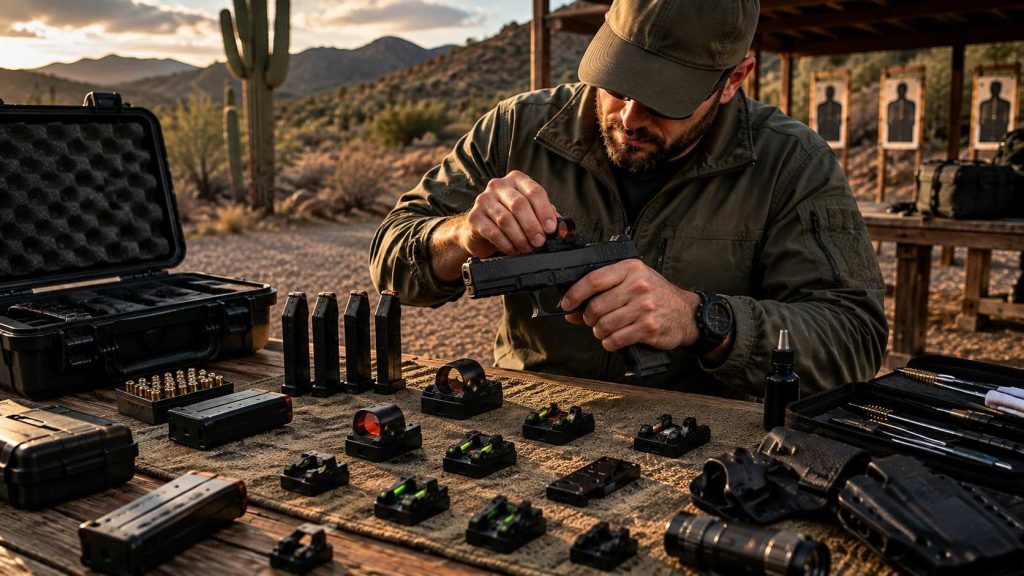
Customers should review what the manufacturer says about construction and intended use.
A higher price does not automatically indicate better quality, and a lower price does not automatically mean that a product is unsuitable.
Construction, compatibility, warranty support, documentation, and intended purpose should all be considered together.
Warranty and Customer Support
Warranty coverage can be an important consideration when comparing accessories.
Customers should understand what the manufacturer covers, how long coverage lasts, and whether there are specific conditions associated with warranty claims.
Customer support can also be valuable when questions arise about compatibility or product documentation.
Keeping receipts, manuals, and warranty information organized can make future support easier.
For Gun Pro shoppers, reviewing both retailer policies and manufacturer warranty information can provide a clearer understanding of the purchase.
Quality Does Not Mean More Features
Modern accessories can include many features, but additional features are not automatically beneficial for every customer.
A product should be evaluated according to the owner’s actual requirements.
If a feature has no clear purpose within the customer’s circumstances, there may be little reason to prioritize it.
This principle can help prevent unnecessary spending and keep equipment management simpler.
A responsible setup is not defined by the number of accessories it contains.
Professional Assistance for Technical Work
Some firearm accessories can involve technical installation or fitting.
Customers who are unfamiliar with such work should consider consulting a qualified professional.
Professional assistance can help address questions concerning compatibility, fitting, and manufacturer requirements.
Owners should avoid improvising modifications or relying on generic instructions when product-specific documentation is available.
Recognizing when professional assistance is appropriate is an important part of responsible ownership.
A Responsible Pistol Accessory Buying Checklist
Before purchasing a pistol accessory, customers can use the following checklist:
- Determine the accessory’s precise function.
- Verify the precise model of the firearm and any other details.
- Use the manufacturer’s documentation to confirm compatibility.
- Examine the product’s constraints, materials, dimensions, and intended usage.
- Examine the maintenance, care, and warranty details.
- When necessary, take storage and transit needs into account.
- Before making a purchase, confirm all applicable rules and regulations.
- When technical installation or fitting is needed, seek out trained expert assistance.
This process helps shoppers approach firearm-related purchases more deliberately.
How Gun Pro Fits Into the Research Process
Gun Pro can serve as a starting point for customers researching pistol accessories online.
Customers can review product categories, descriptions, and available specifications before deciding whether a product deserves further consideration.
However, responsible shopping should include additional research when necessary.
Manufacturer documentation can provide technical information, while official government sources can provide current legal requirements.
If a customer is uncertain about compatibility or intended use, asking for clarification before purchasing is preferable to guessing.
Evaluating Online Reviews
Customer reviews can provide useful context, but they should not be treated as definitive technical evidence.
A review reflects an individual experience and may involve a different firearm, configuration, environment, or set of circumstances.
Reviews can help shoppers identify common questions or concerns, but manufacturer documentation should remain the primary source for technical specifications.
When important questions remain, professional advice may be appropriate.
Responsible Ownership Comes First
Pistol accessories should always be considered within the larger context of responsible firearm ownership.
Secure storage, appropriate education, safe handling practices, maintenance awareness, responsible transportation, and legal compliance remain important regardless of the products an owner purchases.
Accessories should support these responsibilities rather than distract from them.
For new firearm owners, professional education may be particularly valuable. Experienced owners can also benefit from continued learning and periodic review of current requirements.
Legal Requirements and Regulations
Firearm-related laws can differ substantially between jurisdictions.
Requirements may apply to ownership, purchasing, accessories, magazine capacity, storage, transportation, and other activities.
Because laws can change, customers should verify current requirements through appropriate official sources.
The availability of a product on an online retailer does not guarantee that every customer is legally permitted to purchase, possess, transport, or use it.
When legal questions are unclear, customers should consult the appropriate authority or a qualified legal professional.
How to Make Better E-Commerce Decisions
A thoughtful e-commerce purchase can follow a simple process.
First, identify the need. Next, understand the product category. Then verify compatibility and review manufacturer specifications.
After that, consider warranty coverage, maintenance requirements, product support, and applicable legal requirements.
Only after these questions have been addressed should the customer decide whether the product is appropriate.
This process helps turn online shopping into informed decision-making rather than impulse purchasing.
Final Thoughts
Comprehending handgun accessories is crucial for proper gun ownership and knowledgeable online shopping. The category encompasses a broad range of goods, each of which may have distinct functions, specifications, compatibility needs, maintenance considerations, and legal limitations.
The best strategy for Gun Pro clients is to begin with a real requirement and thoroughly investigate the pertinent product. A better judgement can be made with the help of product descriptions, manufacturer documentation, specs, warranty information, and applicable regulations.
Additionally, customers shouldn’t assume that a better setup is always the result of having more accessories. Products that can be managed responsibly and have defined purposes should be part of a practical ownership environment.
Above all, accessories should always come second to safety. Priorities should continue to include safe storage, professional education, responsible handling, maintenance awareness, suitable transportation, and legal compliance.
Customers of Gun Pro can make more deliberate e-commerce choices while maintaining accountability and safety at the core of firearm ownership by taking the time to learn about products before making a purchase.
Frequently Asked Questions
What should I know before purchasing attachments for a pistol?
Recognise the product’s intended use, compatibility, construction, specs, warranty, upkeep needs, and any applicable legal limitations. Before making a purchase or using a product, customers should also go over the manufacturer’s paperwork.
Are all pistol accessories compatible with every type of firearm?
No, compatibility may vary depending on the specific model, size, setup, and manufacturer specifications of the handgun. Prior to placing an order, always confirm compatibility.
What is product compatibility so crucial?
It’s possible that an attachment made for one configuration won’t work with another. Verifying compatibility lowers the chance of utilising a product outside of its intended parameters and helps avoid inappropriate purchases.
Should I trust photos of the products?
No, photos do not prove technical compatibility, but they can assist clients in understanding overall appearance. When making critical compatibility considerations, manufacturer specifications should be consulted.
Are products associated with magazines subject to regulations?
Depending on the jurisdiction, certain products related to magazines could be restricted. Before buying or owning such devices, consumers should confirm the most recent local laws.
Why is safe storage crucial?
A key component of proper gun ownership is secure storage, which can lessen unwanted access. Owners should abide by the manufacturer’s guidelines and any applicable laws.
Can accessories take the role of firearm safety instruction?
No, education and safe handling techniques cannot be replaced by accessories. Owners can acquire suitable safety practices with the aid of professional training.
Do accessories for firearms need to be installed by professionals?
It is wise to speak with a qualified expert if installation or fitting calls for technical weapon knowledge. Consumers should always adhere to the directions provided by the manufacturer.
Does better quality equate to a higher price?
Not always. Instead than focusing only on pricing, quality should be assessed using construction, paperwork, compatibility, warranty support, intended purpose, and manufacturer information.
Are all products sold online legal where I live?
No, jurisdiction-specific laws differ, and legal eligibility is not determined by retail availability. Clients are in charge of verifying the regulations that apply to their situation and locality.