Ask ten pistol owners whether a magazine should be stored loaded or empty, and you will hear ten confident answers. Some swear a loaded magazine is ruined within a year. Others have run the same loaded magazines for a decade without a single stoppage. The truth sits closer to the second group, but with conditions attached.
A good magazine spring is not a balloon that slowly leaks strength just because it is squeezed. It is a piece of engineered steel, and it behaves like one. This guide separates the spring facts from the range folklore: what wears a spring out, how short and long-term storage differ, and the checks that keep stored magazines ready.

One safety rule runs through everything that follows. Before you handle any magazine for a storage check, the pistol stays unloaded, checked clear, and pointed in a safe direction, and the magazine you are inspecting stays empty.
The Short Answer: Sitting Loaded Does Not Wear Out a Good Spring
Here is the honest answer first. A quality magazine spring, compressed inside its designed limits, does not meaningfully weaken just from sitting loaded. Weeks, months, and even years of steady compression are not what kill most springs.
Spring makers and magazine manufacturers have said this for years. A spring works within an elastic range, and holding it inside that range is exactly what it was built to do. It is the flexing, not the holding, that slowly uses a spring up.
That does not mean every loaded magazine lasts forever. Cheap springs, damaged tubes, dirt, and rust all shorten a magazine’s life. The point is narrower: the calendar, by itself, is a poor reason to unload everything you own.
What the Spring Is Actually Doing in There
Inside the tube, the spring pushes the follower up so each round is presented at the same height, every time. Loaded to capacity, it is compressed near its working limit, but still inside the range its designer intended.
Nothing about that steady squeeze keeps changing the steel month after month. Once a spring takes its initial set, which happens early in its life, it settles down. From then on, quiet storage asks very little of it.
Cycles Wear Springs Out, Not Sitting Still
Every load and unload is one full cycle of compression and release. Range magazines that are loaded, shot empty, and loaded again, week after week, collect thousands of those cycles. That repeated flexing is what gradually softens a spring.
Think of bending a piece of wire back and forth. Holding it bent in one position does little. Working it backwards and forwards, again and again, is what finally weakens it. A magazine spring lives by the same simple rule.
Dirt makes every cycle harder than it should be. Grit inside the tube drags on the follower and adds friction the spring must fight. A dirty magazine can feel weak long before its spring has actually given up.
Overloading does damage of a different kind. Forcing an extra round past the magazine’s true capacity can push the spring beyond its design. So can leaving a magazine where heat builds up day after day, such as a hot vehicle.
Why Constant Compression Gets the Blame
The myth survives because the timing fools people. A heavily used range magazine starts to fail, and its owner remembers it also sat loaded between trips. The sitting gets blamed, when the shooting did the wearing.
Short-Term and Long-Term Storage Are Different Jobs
Storage advice goes wrong when it treats every magazine the same. A magazine kept ready for home use has one job. A spare put away for next season, or next year, has a completely different one.
Short-term storage is about readiness measured in days or weeks. Long-term storage is about preservation measured in months or years. The spring can handle both, but your habits should change with the job.
The Ready Magazine Kept at Home
Many owners keep one or two magazines loaded for a home-defense pistol. On spring grounds alone, that is a defensible choice. A quality magazine from a maker you trust will not go soft sitting ready over a season.
Readiness, though, comes with duties. That magazine must live somewhere locked and secure, away from children and visitors, and handled under your local laws. A loaded magazine left loose in a drawer fails every test except the spring test.
It also needs a check date, not just good intentions. When you check it, the pistol is unloaded and checked clear first, every single time, no exceptions.
Long-Term Storage: Empty, Clean and Dry
For magazines going away for months, empty is the sensible default. Not because the spring demands it, but because empty magazines are simpler to store safely, easier to inspect, and raise no questions if someone else opens the box.
Clean them before they go away, not when they come back. Powder residue and gritty dust left inside a tube keep working against the follower all winter. A dry brush and a clean cloth do most of the job.
Go easy with oil inside a magazine. A heavy coat collects dust and can reach the ammunition, which helps nobody. Most makers want the inside clean and essentially dry, with at most a whisper of protectant on the outside.
- Storing magazines in a damp basement, garage or car boot, where rust starts quietly.
- Leaving grit and powder residue inside the tube for a whole season.
- Soaking the inside with oil that collects dust and reaches the cartridges.
- Throwing magazines loose into a box, where feed lips get dented and bent.
- Forgetting which magazines are loaded, and never checking any of them.
Should You Download by a Round or Two?
Some owners load one round short, believing it rests the spring. For a stiff new magazine that is hard to seat on a closed slide, it can help the gun handling.
As a spring-saving measure, it changes very little. Do it if it suits your pistol and your habits, and be honest about why. Just do not expect it to double a spring’s life. Cycles, dirt and damage will still decide when that spring is finished.
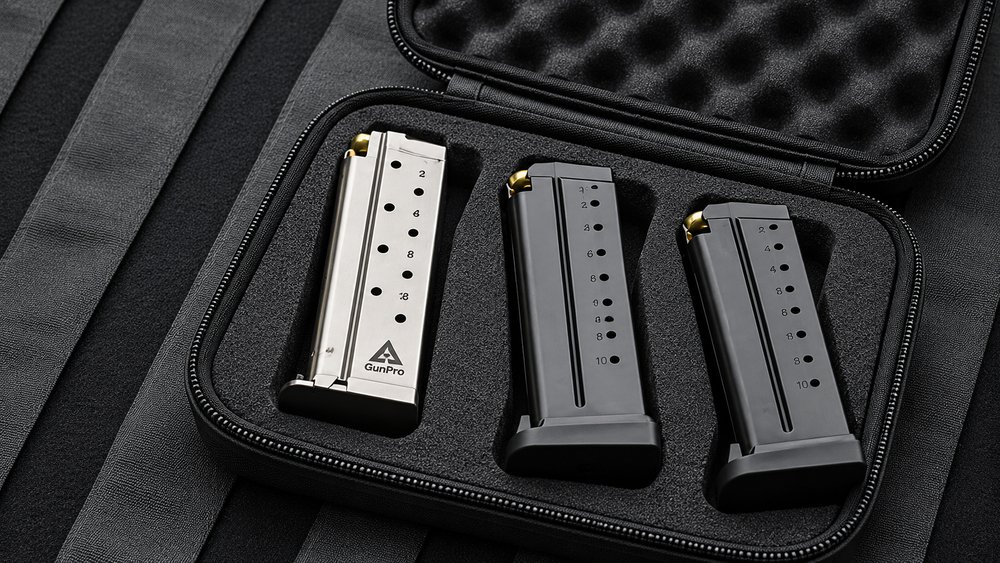
A foam case keeps stored magazines separated, upright and protected from knocks.
Rotation: The Habit That Actually Extends Magazine Life
If you keep ready magazines, rotate them. Swapping the loaded magazine for a rested spare every few weeks spreads the cycles evenly across your set. No single magazine becomes the tired one that always does the work.
Rotation also forces inspection, and that may be its bigger value. A magazine that is handled and checked four times a year rarely surprises you. A magazine forgotten for three years is the one that fails on demand.
A Simple Rotation Routine
- With the pistol unloaded, checked clear and pointed in a safe direction, remove the ready magazine.
- Unload that magazine, wipe it down, and check the follower moves smoothly through the tube.
- Put it at the back of your stored set, empty, clean and dry.
- Take the magazine at the front of the set, inspect it, then load it for ready use.
- Note the date on a card kept with the set, so rotation never relies on memory.
Marking Magazines So Rotation Actually Works
Rotation fails when every magazine looks identical and nobody remembers which is which. A small number on the baseplate, written with a paint pen, ends the guessing. Keep the numbers simple and keep a note of them.
Marking pays off again when one magazine starts to misbehave. You can set that numbered magazine aside instead of blaming the pistol or the ammunition.
Where to Store Magazines: Dry, Cool, Secure and Legal
The best storage place is unglamorous: indoors, dry, at a steady room temperature, and locked. A safe or lockable cabinet in a room you live in gives magazines the same conditions your pistol already prefers.
Security is not optional decoration. Loaded magazines, and the ammunition on its own, should be stored so children and unauthorized visitors cannot reach them. Follow your local and state laws on firearm and ammunition storage, because they vary and they come first.
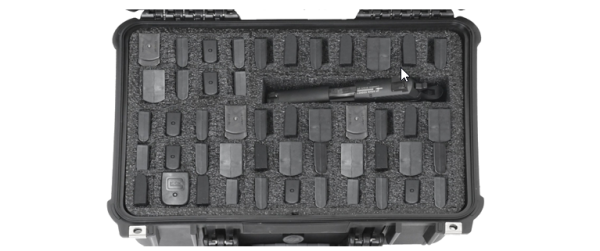
Inside a proper safe, magazines stay dry, organized and out of the wrong hands.
Humidity, Heat and the Enemies You Cannot See
Rust starts quietly on a spring and inside a tube, long before it shows outside. A desiccant pack in the safe does more for stored magazines than any unloading ritual.
Heat is the other slow enemy. Springs tolerate normal room conditions for years, but repeated hot cycles in a vehicle or attic age everything faster. If a place feels harsh to sit in, it is harsh storage.
Checking Stored Magazines Before You Trust Them
A stored magazine earns trust by passing a check, not by looking fine in the box. Do this with the magazine empty and the pistol nowhere in your hands until the magazine itself has passed.
Work slowly, with good light. Start with the tube. Look for dents, bulges, and bent feed lips, and check the baseplate still sits tight. A dropped magazine can look harmless and feed badly for the rest of its life.
Press the follower down through its full travel and let it rise again. It should move smoothly, without dragging, tilting, or catching halfway. Gritty movement means clean it first and judge it afterwards, not before.
Feed Lips, Followers and the Honest Range Test
Feed lips hold every round at the right angle, and they bend before springs wear out. Compare a suspect magazine against a known good one from your set. A visible difference is reason enough to retire it from serious use.
The final test happens at the range, under your range’s rules. Run a stored magazine through a full load, more than once. Repeated clean runs are what trust is built on.
When a Spring Actually Needs Replacing
Replace a spring for symptoms, not for birthdays. The classic signs are failures to feed the last round, a follower that no longer locks the slide open, and rounds that sit nose-low in the tube.
A spring that has become clearly shorter and weaker beside a new one has told you its story. Throw the old one away so it never sneaks back into service.
Sometimes the honest fix is a whole new magazine, not a spring. Cracked tubes, spread feed lips, and worn locking notches do not heal. That is the moment a quality replacement, matched to your pistol, earns its price.
At GunPro, the Sure Fire Anti-Jam 1911 magazines are built for exactly that job, in 7, 8 and 10-round versions for .45 and 9mm, priced at $37.50 to $39. If you are unsure whether a magazine can be saved, a certified gunsmith can judge it in hand, and GunPro in Saint Louis, Missouri, can point you the right way.
Frequently Asked Questions
1. Will keeping a magazine loaded ruin the spring?
No, not by itself. A quality spring tolerates steady compression for years. Cycles, dirt, damage and rust are what wear magazines out in real life.
2. How long can a magazine stay loaded safely?
There is no fixed expiry date. A good magazine can stay loaded for months and still feed perfectly, if it is stored dry, kept secure, and checked on rotation.
3. Is it better to store spare magazines empty?
For long-term storage, yes. Empty magazines are easier to inspect and simpler to store safely. The spring would survive loaded, but empty is the cleaner habit for spares.
4. Does loading one round short save the spring?
Not in any way you could measure. It can make a stiff new magazine easier to seat. Spring life is decided by cycles, cleanliness and condition, not by one round.
5. How do I know when to replace a magazine spring?
Watch for feeding failures on the last round, a slide that stops locking open, and a follower that feels weak or drags. Confirm it at the range, then replace it.
[/fusion_text][/fusion_builder_column][/fusion_builder_row][/fusion_builder_container]