Ask any experienced shooter where feeding problems start, and most will give you the same answer. It is rarely the pistol itself. More often, it is the magazine that has been dropped in the dirt, reloaded a thousand times, and never once opened up and cleaned.
A magazine is a simple machine, but it has a hard job. The spring has to push every round up at the right speed, the follower has to travel without tilting or dragging, and the feed lips have to present each cartridge at exactly the right angle, every single time.
When dirt, grit, and old fouling build up inside the tube, that simple machine slows down. Rounds nose-dive, the follower sticks, and a pistol that ran perfectly last month suddenly cannot get through a full magazine without a stoppage.
The good news is that magazine care is easy. You do not need a workshop, special training, or expensive equipment. You need a clean bench, a few basic tools, about fifteen minutes per magazine, and the patience to work through each step in order.
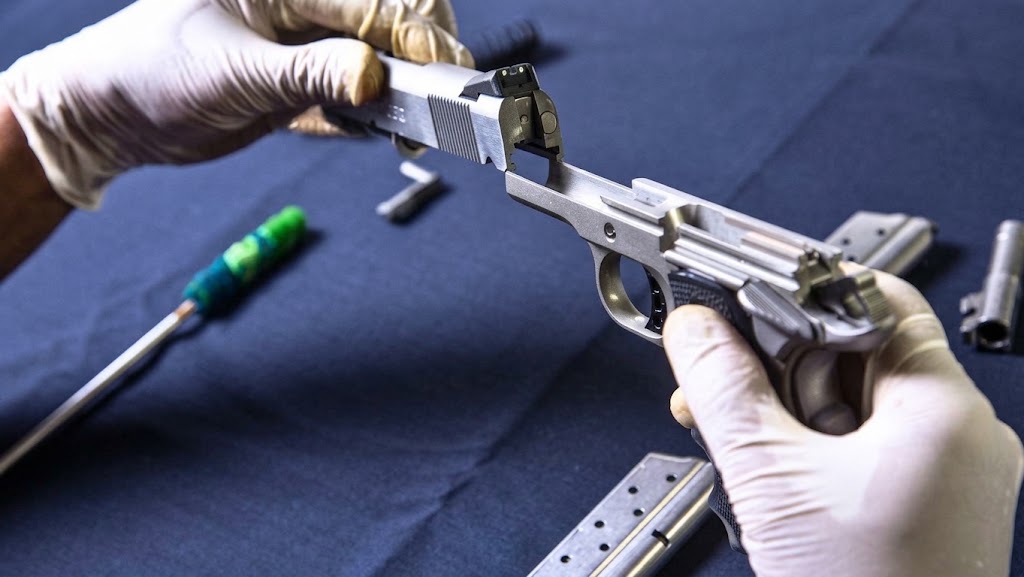
Before you touch anything, make the pistol safe. Remove the magazine, lock the slide open, and check the chamber visually and by touch. The pistol stays unloaded on the bench, muzzle pointed in a safe direction, and all live ammunition leaves the room entirely.
Why a Dirty Magazine Stops a Good Pistol
Every time you shoot, a little carbon and unburned powder finds its way into the magazine. Every time a magazine hits the ground at the range, it picks up sand and grit. That mixture settles inside the tube and coats the spring and follower.
Friction is the real enemy. A follower that should glide up the tube starts to drag and hesitate instead. The spring wastes its energy fighting that drag, so the top round arrives late or sits too low, and the slide either misses it or drives it into the feed ramp at a bad angle.
Dirt Hides Where You Cannot See It
The outside of a magazine can look perfectly clean while the inside tells a different story. Fouling packs into the corners of the tube and around the spring coils, exactly where it does the most harm and exactly where a quick wipe never reaches.
That is why a magazine that looks fine can still cause trouble. The only honest way to judge one is to take it apart, look inside, and run a clean cloth through the tube. What comes out on that cloth usually settles the argument.
When to Clean Your Magazines
There is no single schedule that suits every shooter. A magazine that lives in a range bag and fires a few hundred rounds a month needs attention far more often than one that sits loaded in a safe and only comes out twice a year.
Use and conditions matter more than the calendar. A magazine dropped in mud or sand needs cleaning that same day, whatever the schedule says. A magazine carried daily against clothing collects lint and sweat, and deserves a look even if it has not been fired.
What You Need Before You Start
Magazine cleaning needs very little, and most of it is already in a basic gun cleaning kit. Lay everything out on a clean, light-coloured cloth before you begin, so small parts stay visible and nothing rolls off the bench and disappears.
- A soft nylon brush and an old toothbrush for scrubbing the tube and follower
- Clean cotton cloths or large cleaning patches that fit loosely inside the tube
- A wooden dowel or cleaning rod section for pushing the cloth through the tube
- A small punch or similar tool for pressing the baseplate locking plate on 1911 magazines
- A mild, plastic-safe gun cleaner for stubborn fouling, used sparingly
- A clean, flat work surface with good light and a small tray for the parts
Work on one magazine at a time, start to finish. Springs and followers from different magazines can look nearly identical while being slightly different, and mixing parts between magazines is an easy way to create a problem that did not exist before.
Between full cleanings, a quick habit helps a lot. Tap loose dirt out of the tube after a range session, wipe the feed lips with a dry cloth, and store magazines somewhere dry instead of leaving them in a damp range bag.
Keep a simple note of which magazines you own and when each was last cleaned. Shooters with several magazines in rotation lose track quickly, and the one never cleaned is usually the one that fails first.
Step by Step: Cleaning a 1911-Style Magazine
The steps below suit a typical single-stack 1911 magazine with a removable baseplate, like the Sure Fire AntiJam 1911 magazines sold at GunPro in 7, 8 and 10 round versions for .45 ACP and 9mm, priced from $37.50 to $39.
Confirm the magazine is completely empty before step one. Run a finger across the follower and look inside the tube. If there is any doubt at all, stop and check again. No cleaning job is worth rushing the safety part.
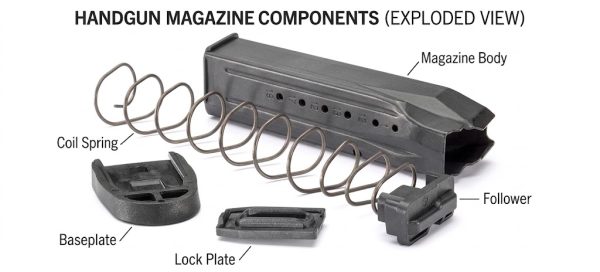
- Press the locking plate in through the hole in the baseplate with your punch, then slide the baseplate forward and off the tube, keeping a thumb over it because the spring is under tension and will push it off.
- Let the spring and follower slide out of the bottom of the tube slowly and under control, and lay the parts on your cloth in the order they came out, noting which way the spring faces.
- Push a dry cotton cloth through the tube with the dowel, from top to bottom, and repeat with fresh cloths until the last one comes out clean, paying attention to the corners near the feed lips.
- Scrub the follower and the spring gently with the nylon brush, wipe both down with a clean cloth, and use a small amount of mild cleaner only where fouling refuses to move.
- Wipe the outside of the tube and the feed lips, then hold the tube up to the light and look through it for dents, cracks, rust spots or anything still stuck inside.
- Slide the follower and spring back into the tube in the same direction they came out, compress the spring carefully, and slide the baseplate back on until the locking plate clicks into its hole.
Work slowly on a clean, well-lit bench, with one magazine apart at a time. Go slowly on the baseplate step the first few times. The spring wants to escape, and a spring launched across the room is both annoying to find and easy to bend. A thumb held firmly over the baseplate as it slides free solves the problem.
If your magazine has a welded or fixed baseplate, do not force it. Those designs are cleaned from the top with the follower depressed, or with a magazine brush made for the purpose. Forcing a fixed base will bend it, and a bent base ends the magazine’s useful life.
What Not to Do
More magazines are harmed by over-enthusiastic cleaning than by dirt. The most common mistake is oil. A magazine should run essentially dry, because oil inside the tube collects dust and powder residue and turns it into a sticky paste that slows the follower down.
If you use a cleaner that leaves any film behind, wipe the parts until they feel dry to the touch. At most, a steel tube in a damp climate can take the lightest wiped-on film against rust, and even then it should look dry when you hold it to the light.
Keep Harsh Solvents Away From the Parts
Strong solvents, brake cleaner and degreasers have no place on a magazine. They can attack polymer followers and baseplates, strip protective finishes from the tube, and leave the spring steel unprotected. A mild, plastic-safe gun cleaner is as strong as anything a magazine ever needs.
Never stretch a magazine spring to restore its length. Stretching gives a brief illusion of strength and then weakens the spring faster than before. A spring that has genuinely gone soft is finished, and the correct repair is a new spring, not a pulled one.
Do not file, bend or squeeze feed lips back into shape with pliers unless you truly know the correct dimensions. Lip geometry decides how the round is presented to the chamber, and a small bend in the wrong place turns a feeding problem into a worse one.
Checking the Spring and Follower
While the magazine is apart, the spring deserves a close look. Compare its free length with a newer magazine of the same type if you have one. A spring that sits noticeably shorter than its neighbour has taken a set and is living on borrowed time.
Look along the spring for kinks, flattened coils or rust. Any of those means replacement. Springs are cheap compared with the cost of a stoppage at the wrong moment, and they are the single most replaced magazine part for good reason.
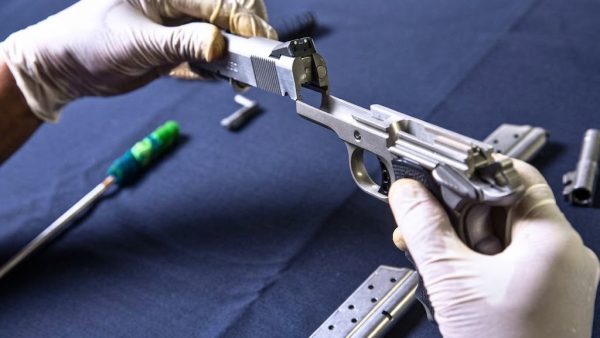
Magazines that are cleaned, checked and rotated last for years of regular use.
The follower should travel the full length of the tube smoothly when you push it with a dowel. If it tilts, binds or sticks at one point, find out why before reassembly. A cracked or worn follower is another inexpensive part that is far better replaced early.
One Last Look at the Feed Lips
Finish your inspection at the feed lips. Look for cracks at the rear corners, lips that have spread apart, or a tube that is dented where it was dropped. Damage like this does not clean away, and a magazine with bent lips or a cracked tube should be retired or marked for practice only.
The Function Check After Cleaning
Reassembly is not the finish line. A cleaned magazine earns its place back in the range bag only after it proves it still works, and that check takes less than a minute with the pistol confirmed unloaded and pointed in a safe direction.
Seat the empty magazine in the pistol and confirm it locks in positively and drops free when the release is pressed. Then press the follower down through its full travel with a dowel or pencil. It should move smoothly, with even spring pressure, and spring back without hesitation.
At the range, load only a few rounds for the first test and shoot them slowly. Watch for the slide locking open on the last round, which tells you the follower is reaching the top with enough speed and height to do its job.
If a magazine still misbehaves after a proper clean, and the spring and follower check out, the magazine itself is suspect. Retire it or set it aside for a certified gunsmith to examine. If you are ever unsure about any part of this process, that gunsmith visit is always the right call.
None of this asks much of you. Fifteen minutes, a few times a year, keeps the hardest-working part of your pistol doing its job quietly in the background, which is exactly where you want it.
GunPro, based in Saint Louis, Missouri, stocks magazines and sights including Delta 1 Sights for shooters who would rather replace a tired part than fight it.
Frequently Asked Questions
1. How often should I clean my pistol magazines?
It depends on use rather than the calendar. A regular range magazine deserves a full clean every 500 to 1,000 rounds, a magazine dropped in dirt or sand needs one the same day, and a carry magazine should be opened and checked every two to three months.
2. Should I oil the inside of my magazine?
No. Magazines should run essentially dry, because oil inside the tube traps dust and fouling and forms a paste that slows the follower. Wipe every part until it feels dry, and use at most the lightest wiped-off film on a steel tube stored in a damp climate.
3. Can I clean a magazine without taking it apart?
You can knock out loose dirt and wipe the feed lips and follower from the top, and that helps between sessions. But fouling packs into the bottom of the tube, and only a proper strip-down reaches it.
4. How do I know if my magazine spring needs replacing?
Compare its free length with a newer spring of the same type. If it sits clearly shorter, feels soft, or shows kinks, flattened coils or rust, replace it. Never stretch a tired spring back out, because that weakens it further and only delays the failure.
5. My magazine still causes stoppages after cleaning. What now?
Check the feed lips for cracks or spreading and the tube for dents, and try the magazine in the pistol with just a few rounds first. If the problem remains, retire the magazine or take it to a certified gunsmith, and follow your local laws on magazine repair and replacement.