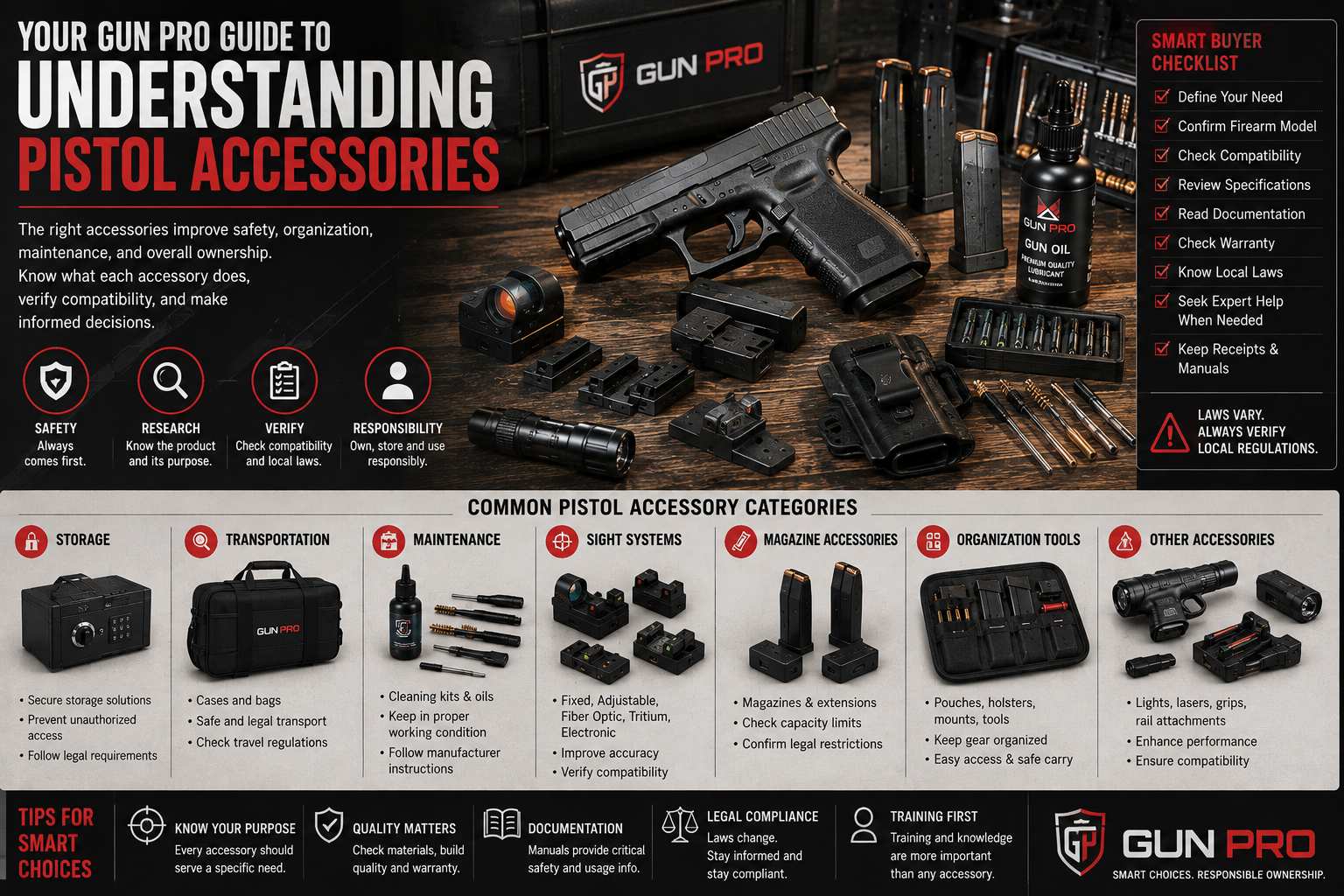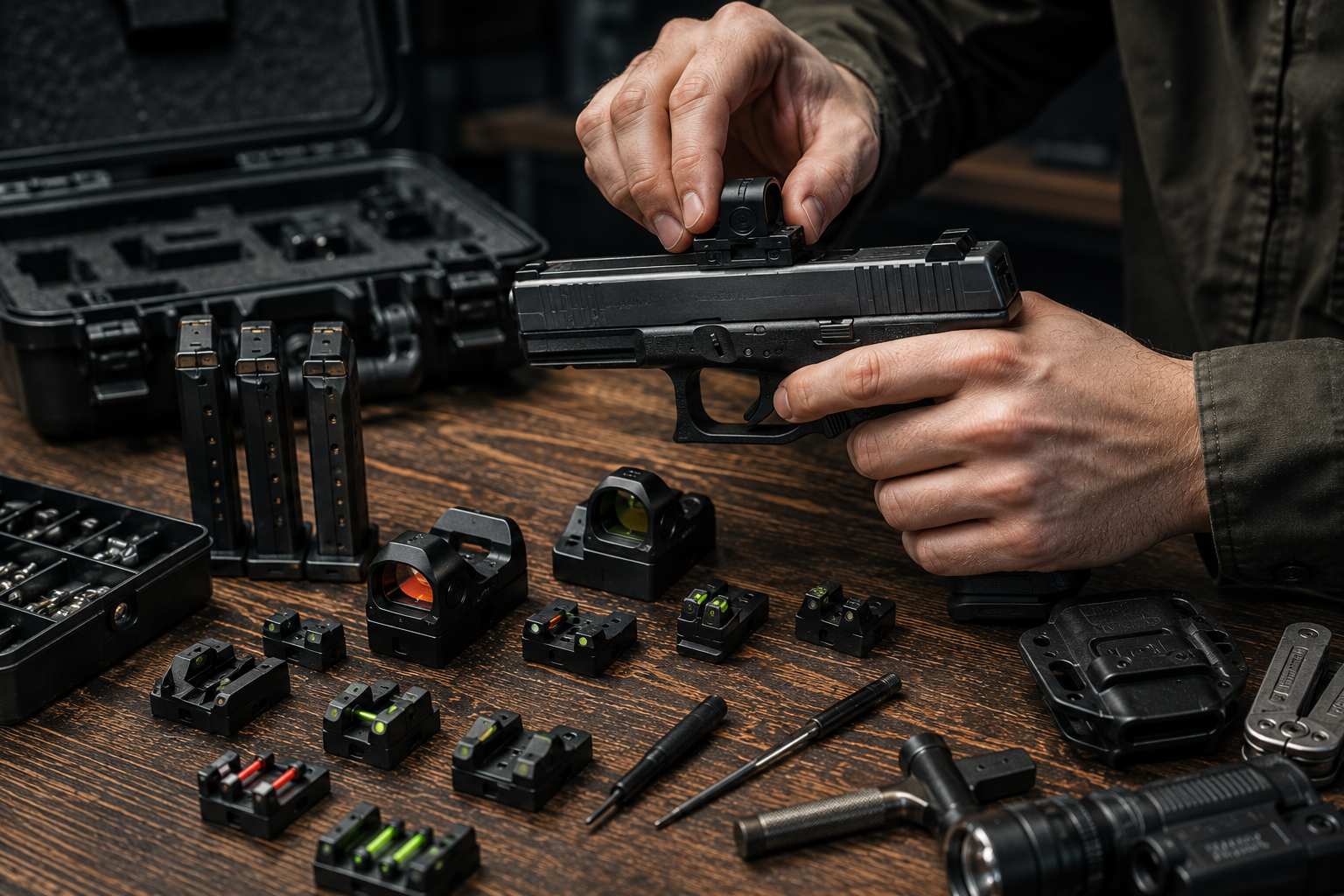
Selecting a pistol sight is more than just picking the most well-liked item or the feature-rich accessory. Understanding the functions of various sight systems, their differences in construction and visibility, and whether a given product is suitable for the firearm and the situation at hand should be the first step in the process for responsible gun owners. A cautious approach can also help consumers concentrate on dependable, well-documented equipment and steer clear of pointless purchases.
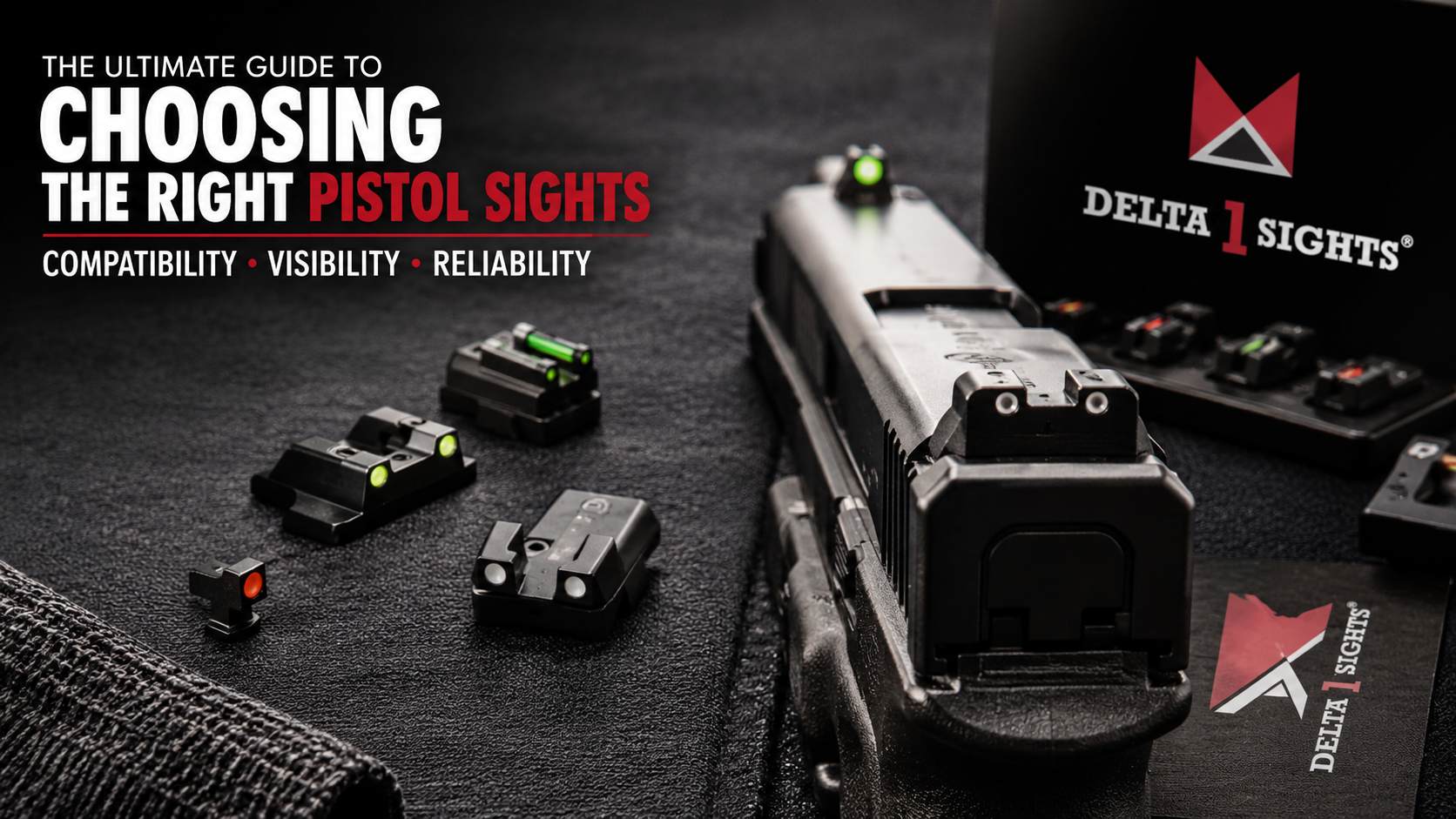
Customers using Gun Pro to explore pistol sights may find it much simpler to shop if they are familiar with the terms used in various product listings. The construction, illumination technique, proportions, compatibility, and intended use of various sight designs can differ. While some use illumination technology or other visibility features, others are built around traditional sighting setups.
An informative summary of the aspects that consumers should take into account when looking into pistol sights is given in this Gun Pro guide. In order to give consumers more information before making an online purchase, it focuses on product comprehension, compatibility, responsible ownership, maintenance awareness, and legal considerations.
Understanding the Role of Pistol Sights
One part of a firearm’s sighting system is a pistol sight. A front sight and a rear sight that function as a reference system are typically seen in traditional handgun sight configurations. Customers who are not familiar with the numerous categories may find sight language difficult because different designs can change the system’s visual look.
Therefore, rather than comparing brands or pricing right away, the first step in investigating a sight is to comprehend its basic design.
Features like fixed or adjustable structure, various sight profiles, illumination technologies, protective construction, or particular compatibility information may be mentioned in product descriptions. Although these descriptions are meant to assist consumers in understanding the purpose of a product, they should always be taken into account in conjunction with the manufacturer’s documentation.
A product visual or a brief marketing explanation should never be the only factors considered while making a prudent purchase.
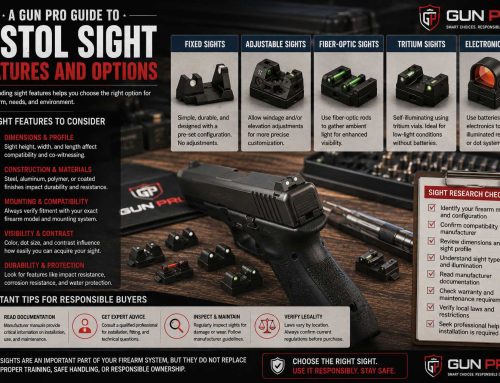
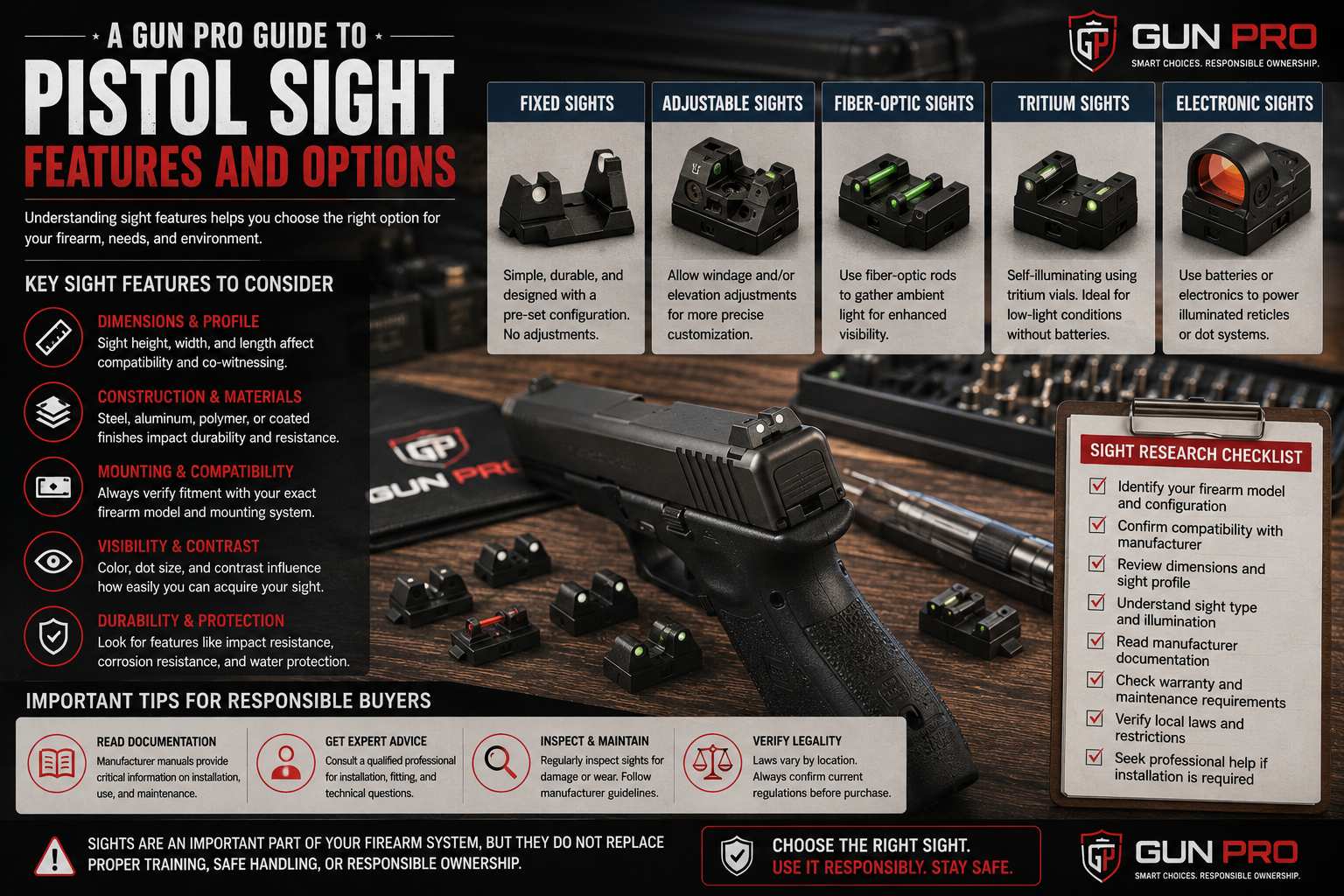
Fixed and Adjustable Sight Designs
The distinction between fixed and adjustable sight designs is one of the fundamental differences that consumers may come across.
A fixed sight is often made to stay in its installation location and has a predetermined configuration. As the name implies, an adjustable sight has a mechanism that makes it possible to alter specific aspects of the sight location.
Which category is generally superior is not a crucial factor for consumers. Rather, the question is whether the product’s design is suitable for the particular firearm and its intended legal use.
While fixed designs might have a more straightforward construction, adjustable items might have more parts and mechanisms. Therefore, before making a choice, it is important to carefully evaluate the product specs and manufacturer documentation.
Additionally, consumers should refrain from presuming that two similar-looking products are interchangeable. Two sights may have different size and compatibility requirements even if they appear to be virtually identical.
Understanding Sight Compatibility
Compatibility is one of the most important considerations when purchasing any firearm accessory. A sight should not be selected simply because it belongs to the same general category as the firearm. Manufacturers may use different mounting systems, dimensions, configurations, or model-specific designs. Before ordering, customers should verify the exact firearm model and the compatibility information supplied by the sight manufacturer. When the manufacturer’s documentation does not clearly establish compatibility, contacting the manufacturer or a qualified professional is preferable to guessing. This is especially important for online purchases because photographs can make different products appear more similar than they actually are. Gun Pro customers can use product specifications as a starting point, but manufacturer documentation remains an important source for confirming technical details.
Why Sight Construction Matters
How a sight is designed to endure its operational environment can be influenced by its construction and materials. Depending on the product category, manufacturers may employ various metals, polymers, protective coatings, or other materials.
Customers should search for precise details regarding construction and intended usage when examining a product listing.
Rather of depending just on advertising language, a well-documented product should offer useful specifications. Making an informed purchase can be aided by information on construction, dimensions, compatibility, warranty coverage, and manufacturer assistance.
Customers should use caution when interpreting marketing claims as absolute guaranties, nevertheless. The firearm, the environment, maintenance, and other factors can all affect how well a product performs in real-world situations.
Understanding Illuminated Sight Options
In order to improve visibility of the sighting reference in specific lighting circumstances, some handgun sight systems include illuminating technology. Fiber-optic components, tritium-based illumination, and electronic illumination systems are a few examples that may be found on the market.
These technologies differ in their features and methods of operation.
Ambient light is used by fiber-optic systems to increase the visibility of an optical element. As a result, their appearance can change according on the illumination in the area.
Instead of using traditional batteries, tritium-based devices generate light using a radioactive isotope. Customers should examine manufacturer information and relevant legislation because tritium contains controlled components and has a limited decay period.
Depending on their design, electronic systems can include extra functionality and be powered by batteries or other sources.
The circumstances of the customer and the manufacturer’s specifications determine the best option. Customers shouldn’t assume that one type of lighting technology is always better.
Traditional Sight Configurations
Many gun designs still use traditional sight systems. In order to create a simple visual arrangement, they typically employ contrasting front and rear reference points.
From a purchasing standpoint, one advantage of conventional designs is that their fundamental idea is comparatively simple to comprehend. Without having to comprehend additional electronic components, customers can concentrate on dimensions, compatibility, construction, visibility features, and manufacturer documentation.
This does not imply that traditional sights are suitable for all firearms or owners. Professional advice and compatibility are still crucial factors.
Instead of choosing an item solely on the basis of its appearance, consumers should carefully consider the precise model specifications while evaluating conventional products on an e-commerce website.
Choosing Based on Visibility Characteristics
When comparing handgun sights, visibility is a factor that is frequently mentioned. However, lighting, sight colour, background contrast, eyesight, and other personal characteristics can all have an impact on visibility.
Customers should be wary of generalisations that one sight is always easier to see because these conditions vary greatly from person to person.
Alternatively, consumers might examine manufacturer details outlining the visual features of the sight and contrast those details with their own legal needs and situations.
Professional guidance may also be helpful for anyone who has vision issues. It is not suitable to think of a visual accessory as a substitute for expert training or proper vision care.
Product Size and Profile
Product listings may include measurements that describe height, width, or other physical attributes, and sight dimensions may differ between products.
These specifics are important since a product made for one configuration might not be suitable for another.
Therefore, rather than judging compatibility from photos, customers should confirm the dimensions provided by the manufacturer.
For instance, one shouldn’t assume that a low-profile design would work with every gun or mounting configuration. A more trustworthy source is the compatibility chart or literature provided by the manufacturer.
Asking the manufacturer or store before making a purchase can help avoid placing an inappropriate order when information is unclear.
Manufacturer Documentation Should Come First
One of the best places for investigating a weapon accessory is the manufacturer’s documentation.
Details that aren’t typically included in an online product description can be found in product manuals, specifications, compatibility charts, warranty information, and maintenance instructions.
The retailer’s product site should be taken into account by Gun Pro customers as part of a more thorough investigation. The best course of action might be to consult the manufacturer’s documentation or get in touch with knowledgeable help if a significant technical query is still unresolved.
This strategy is particularly crucial for items that require model-specific compatibility.
Why Professional Installation May Matter
There may be technical aspects to firearm accessories that are not suitable for speculation. Instead of performing an unknown technique, customers should think about visiting a skilled specialist if installation, fitting, adjustment, or modification are necessary.
This is especially important for owners who have never worked with firearm parts before.
When necessary, a specialist can adhere to manufacturer specifications and assist in determining whether an accessory is suitable for a particular handgun.
Instead of experimenting with a weapon component, the safest course of action is to identify when a task is beyond one’s expertise and seek experienced assistance.
Maintenance and Inspection Awareness
Keeping an eye on the equipment’s condition is part of responsible gun ownership.
When it comes to maintenance, replacement, cleaning, and inspection, owners should adhere to the manufacturer’s recommendations. A professional inspection could be necessary if a sight or associated component looks broken, loose, corroded, cracked, or otherwise suspect.
When manufacturer instructions do not support repairs or modifications, customers should not make them on their own.
Maintaining access to product manuals and warranty details might help facilitate future maintenance choices.
Maintaining an accessory involves more than just prolonging its lifespan. It is a component of managing equipment responsibly.
Evaluating Product Quality
A sight’s quality cannot be determined solely by its price.
In a similar vein, a higher price does not always imply that a specific accessory is suitable for every consumer.
Examining the product’s available information is a more beneficial strategy. Contextual information can be obtained from manufacturer reputation, construction specifics, compatibility documentation, warranty coverage, and customer support.
Additionally, buyers should think about if the seller offers transparent information and whether the goods has clear paperwork.
These elements may be more helpful to an online buyer than depending solely on inflated performance claims.
Avoiding Unnecessary Accessories
When purchasing online, one of the simplest mistakes to make is to assume that adding more accessories will inevitably result in a better setup.
Each accessory ought to provide a certain function. Buying a product might only increase expenses and complexity if it doesn’t solve a real need.
This is especially important while perusing different categories on an online store. Feature-rich descriptions and eye-catching photos might make extra products appear necessary even when they are not.
Finding the true need, investigating the pertinent product category, determining suitability, and then determining whether a purchase is warranted are the first steps in a responsible purchasing procedure.
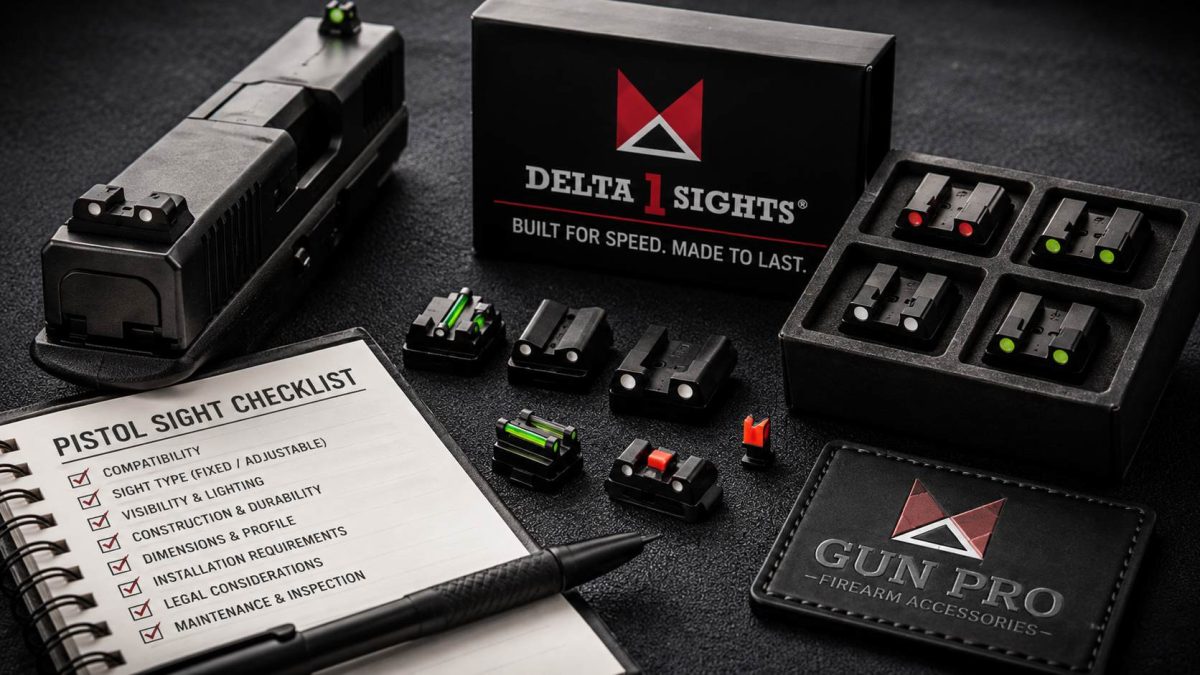
A Responsible Pistol Sight Research Checklist
When researching a pistol sight, customers can approach the decision systematically rather than making an impulse purchase.
- Confirm the exact firearm model and relevant manufacturer specifications.
- Review the sight manufacturer’s compatibility information.
- Understand whether the product is fixed, adjustable, illuminated, or another design.
- Review construction materials, dimensions, warranty information, and product documentation.
- Check applicable laws and restrictions before purchasing or transporting the product.
- Seek qualified professional assistance if installation or fitting is required.
- Consider whether the product addresses a genuine need rather than adding unnecessary complexity.
- Keep manuals, receipts, warranty information, and product documentation for future reference.
These steps are intended to support informed purchasing rather than replace professional advice.
Shopping for Pistol Sights Online
Online purchasing might facilitate product comparisons, but it also necessitates close attention to specifications.
Customers may come across several products that look almost identical in photos yet have very varied compatibility needs. For this reason, a decision to buy shouldn’t be made solely on the basis of product titles.
Examine all of the product details and contrast them with the paperwork provided by the manufacturer. Before placing an order, get clarification if a specification is unclear.
Customers are still in charge of making sure a purchase is legal and suitable for their situation, but a responsible online merchant should give enough information to help customers understand what a product is intended for.
How Gun Pro Can Support Product Research
Customers can easily begin their search for accessories linked to firearms by consulting Gun Pro’s product catalogue. Customers should, however, approach each product purchase with consideration.
Customers can compare product descriptions, specifications, accessible documentation, and other pertinent information while perusing pistol sight categories.
Instead of just selecting the product with the most features, the goal should be to shop intelligently.
Because compatibility can differ significantly between firearm models, Gun Pro clients should also pay attention to product-specific information.
Professional and official sources continue to be more appropriate than depending only on general internet content for enquiries about technical installation, firearm modifications, or legal constraints.
Legal Considerations Before Buying
There can be significant regional variations in firearm laws and regulations. Ownership of firearms, attachments, purchases, transit, storage, and other actions may all be subject to requirements.
Before making a purchase, consumers should confirm the current requirements through the relevant government sources because regulations are subject to change.
Online listings do not guarantee that an item can be bought, owned, transferred, or utilised in every country.
Consumers who are unsure of their legal responsibilities should speak with the relevant authorities or a licensed attorney.
Responsible gun ownership requires adherence to the law.
Final Thoughts
Research, not gut feeling, is the first step in selecting the ideal handgun sight. Customers can make better judgements if they are aware of sight categories, compatibility criteria, construction, illumination technologies, measurements, documentation, and maintenance issues.
The most crucial rule for Gun Pro shopping is to assess each item based on its intended use and the particular specifications of the firearm in question. An introduction can be given by product photos and marketing statements, but technical enquiries are better served by manufacturer documentation and knowledgeable expert help.
Every accessory choice should always start with responsible weapon ownership. More crucial than just adding equipment are safe storage, appropriate training, adherence to the law, meticulous upkeep, and expert help when needed.
Customers can prevent needless purchases, gain a better understanding of the products they are contemplating, and make decisions that are in line with responsible ownership and relevant regulations by conducting careful product research.
Frequently Asked Questions
What should I consider when choosing a pistol sight?
Compatibility, manufacturer documentation, construction, dimensions, intended use, and any relevant legal requirements should come first. Additionally, customers should think about whether hiring a professional to help with installation or fitting is appropriate.
Are all pistol sights compatible with all pistols?
No. Dimensions, manufacturer specs, mounting style, and firearm model can all affect compatibility. Before making a purchase, always confirm compatibility using trustworthy manufacturer information.
What is the difference between fixed and adjustable sights?
While adjustable sights have devices that enable specific aspects of the sight location to be altered, fixed sights have a predetermined configuration. The particular firearm and its intended legal usage determine which option is best.
What are illuminated pistol sights?
Under specific lighting circumstances, illuminated sights employ technologies that increase the visibility of the sighting reference. Ambient light, tritium, batteries, and other technologies may be used in various systems, each with unique features.
Should I install a pistol sight myself?
It is safer to engage a qualified professional rather to try unfamiliar work if installation or fitting calls for technical firearm knowledge. Before beginning any installation-related task, it is usually advisable to examine the manufacturer’s instructions.
Does a more expensive sight mean it is better?
Not always. Cost is just one consideration. Important factors include construction, documentation, compatibility, warranty coverage, manufacturer support, and appropriateness for the intended use.
How can I verify sight compatibility?
Check the precise firearm model and compare it with the sight manufacturer’s compatibility information. If the documentation is unclear, contact the manufacturer or a competent specialist before purchasing.
Why should I buy from an established retailer?
Customers should still independently confirm compatibility, legality, and manufacturer requirements even though an established store can offer product information, policies, customer service, and access to documented products.